Certificate in Behavioral Cybersecurity
The biggest threat is not the code. It is the click.
A 12-week online certificate for professionals who need to understand human cyber risk: social engineering, cybercriminal profiling, persuasion, victimology and the behaviors that open or close digital vulnerabilities.
- Analyze why users click, trust, disclose and bypass security controls.
- Study offender motivation, social engineering and cybervictimology through a behavioral lens.
- Build a human-risk toolkit for security awareness, investigations, compliance and cybercrime prevention.
Cybersecurity fails where trust, pressure and behavior collide.
Behavioral Cybersecurity moves beyond firewalls and antivirus tools to analyze the decisions made by attackers, employees, victims and organizations under real pressure.
You learn to profile malicious actors, recognize persuasion patterns, anticipate risky user behavior and translate cybercriminology into stronger prevention, investigation and awareness strategies.
The technical-only view
Secure the system
Controls, alerts and policies are designed around infrastructure, while the human decision that triggers the incident remains underexplained.
The behavioral view
Secure the behavior
Risk is mapped through trust, bias, deception, pressure, offender motivation, social context and the choices users actually make.
A human-risk skill for security, investigation and leadership teams.
Compact, applied and specific. Each profile connects behavioral science with cyber incidents, fraud, compliance, threat intelligence and organizational resilience.
01
Cybersecurity and IT
Interpret risky user actions and design awareness strategies that address motivation, friction and decision context.
02
Threat intelligence
Add behavioral profiling to attacker tactics, social engineering campaigns and evolving digital threat patterns.
03
Law enforcement
Read behavioral traces, deception patterns and victimization dynamics in digital investigations.
04
Risk, fraud and compliance
Recognize social-engineering red flags, insider-risk indicators and preventable human vulnerabilities.
05
Security leaders
Turn the human factor into policy, training, threat modeling and security culture that people can follow.
06
Legal professionals
Understand the psychological and criminological dimensions of cybercrime, online deception and digital evidence.
Three capabilities technical courses rarely teach.
The certificate focuses on the human layer of cyber defense: who acts, why they act, how they are influenced and how to reduce preventable risk.
Profile the actor
Study attacker motivation, personality indicators and cybercriminological models without reducing cybercrime to stereotypes.
Decode the influence
Analyze persuasion, trust-building, urgency, authority and deception in phishing, pretexting and social-engineering attacks.
Design safer behavior
Use behavioral insight to improve training, security communication, reporting habits and human-centric resilience.
Learn from specialists in behavior, cyber risk and crime science.
The certificate is led by academics and criminal psychologists connected to behavioral analysis, criminology, cybersecurity, threat intelligence and the psychology of digital risk.
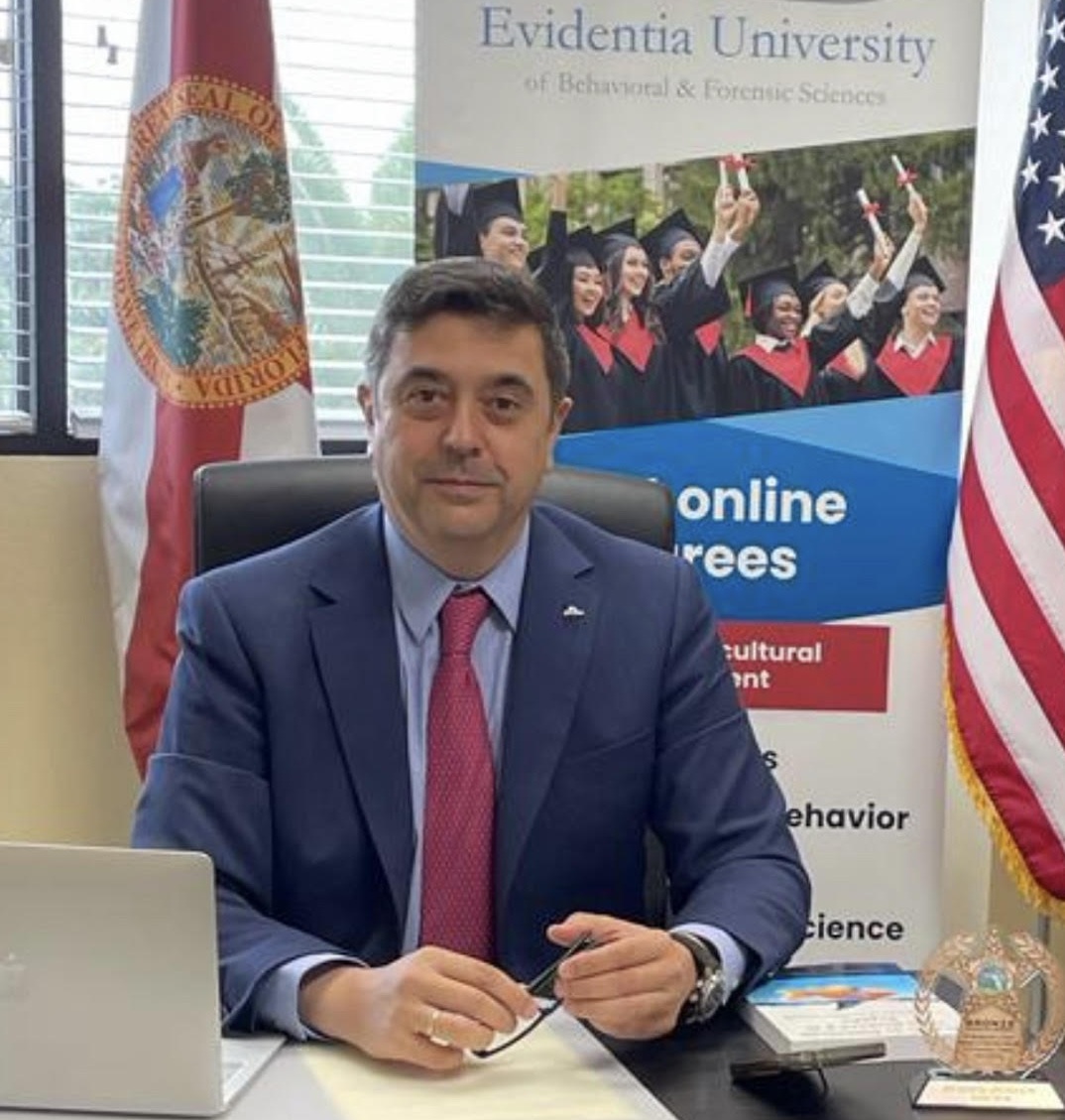
Rafael López, PhD
Founder of Evidentia University · Ph.D. in Psychology and Economics
PhD in Psychology and Economics.

Laura Requena, PhD
Psychology, Criminology and Threat Intelligence
More than 10 years of cybersecurity experience.

Jorge Jiménez
Director, School of Crime Science
Criminal psychologist and criminal analyst.

Ángel Cuñado, PhD
Psychology and Personality Profiling
Nonverbal behavior, lie detection and profiling.
Human-risk analysis is trained through cases: phishing, manipulation, insider risk, victimization and the small decisions that decide whether security works.
Flexible online study, grounded in behavioral cyber cases.
This is not a coding course. You work with cyber incidents as behavior problems: what the attacker needed, what the victim perceived, where trust was built and how the organization can reduce future exposure.
Case-based analysis
Study social engineering, victimology and cybercriminal behavior through applied examples and structured reasoning.
Human-risk frameworks
Use profiling, persuasion and behavioral-risk concepts that can support investigations, awareness and policy.
Online flexibility
Study around professional commitments with a self-paced format and continuous access.
Advisor support
Speak with a real advisor before enrolling to understand fit, schedule and pricing.
Four courses. One human-risk toolkit.
The sequence moves from personality profiling to influence, applied social engineering, cybercriminology and victimology.
Indirect Personality Profiling
Outline personality from behavior and observational indicators to support security and investigative analysis.
Influence and Persuasion
Understand influence techniques and how to encourage cybersecure behavior inside organizations.
Applied Social Engineering. Case Studies.
Analyze real-world cases to recognize and counter sophisticated manipulation and trust-building tactics.
Cybercriminology. Models and Victimology.
Explore attacker motivation, criminological models and victimization in contemporary cybercrime.
The human factor is the next frontier of cyber defense.
Find out whether this certificate fits your professional path. Speak with an advisor about your goals, schedule and next step before you enroll.
Published Evidentia testimonials, not specific to this certificate.
Evidentia publishes student testimonials across programs. There are no cyber-specific testimonials on the public testimonials page, so these are included only as general student voices.
“An approachable, professional, and experienced faculty. The academic environment motivated me to delve deeper like never before.”
“It is demanding but flexible, challenging but rewarding. Studying at Evidentia has been one of my best decisions.”
“A unique opportunity to learn with real cases and a high-level academic structure. Personalized and flexible pace.”
Open enrollment. Start when you are ready.
Talk to an advisor
Share your background in cybersecurity, investigation, risk, law or behavioral science. We will help you assess fit.
Review pricing and access
Compare the certificate fee, payment details and expected study rhythm before you commit.
Enroll and begin
Once enrollment and access are activated, you can start the certificate and progress at your own pace.




Open enrollment. A 12-week online certificate for professionals who want to understand and reduce human cyber risk.
Frequently asked questions
Do I need a technical IT background or a degree in psychology?
No. The certificate is designed for professionals from IT, security, psychology, investigation, risk, fraud, compliance and legal backgrounds.
Is this a technical cybersecurity course?
No. It focuses on the behavioral dimension of cybersecurity: human risk, social engineering, cybercriminology, persuasion and attacker psychology.
When can I start?
The certificate has open enrollment. Students can begin once enrollment, payment and access are activated.
How is this different from the master's?
The certificate is a 12-week specialization focused on concrete applied tools. A master's is a longer graduate program with broader academic depth.
Where can I review tuition?
Use the Pricing button on this page to review Continuing Education tuition information and speak with an advisor if you need clarification.
Ready to compare your options?
Speak with an advisor about fit, timing, study rhythm and pricing before you decide.