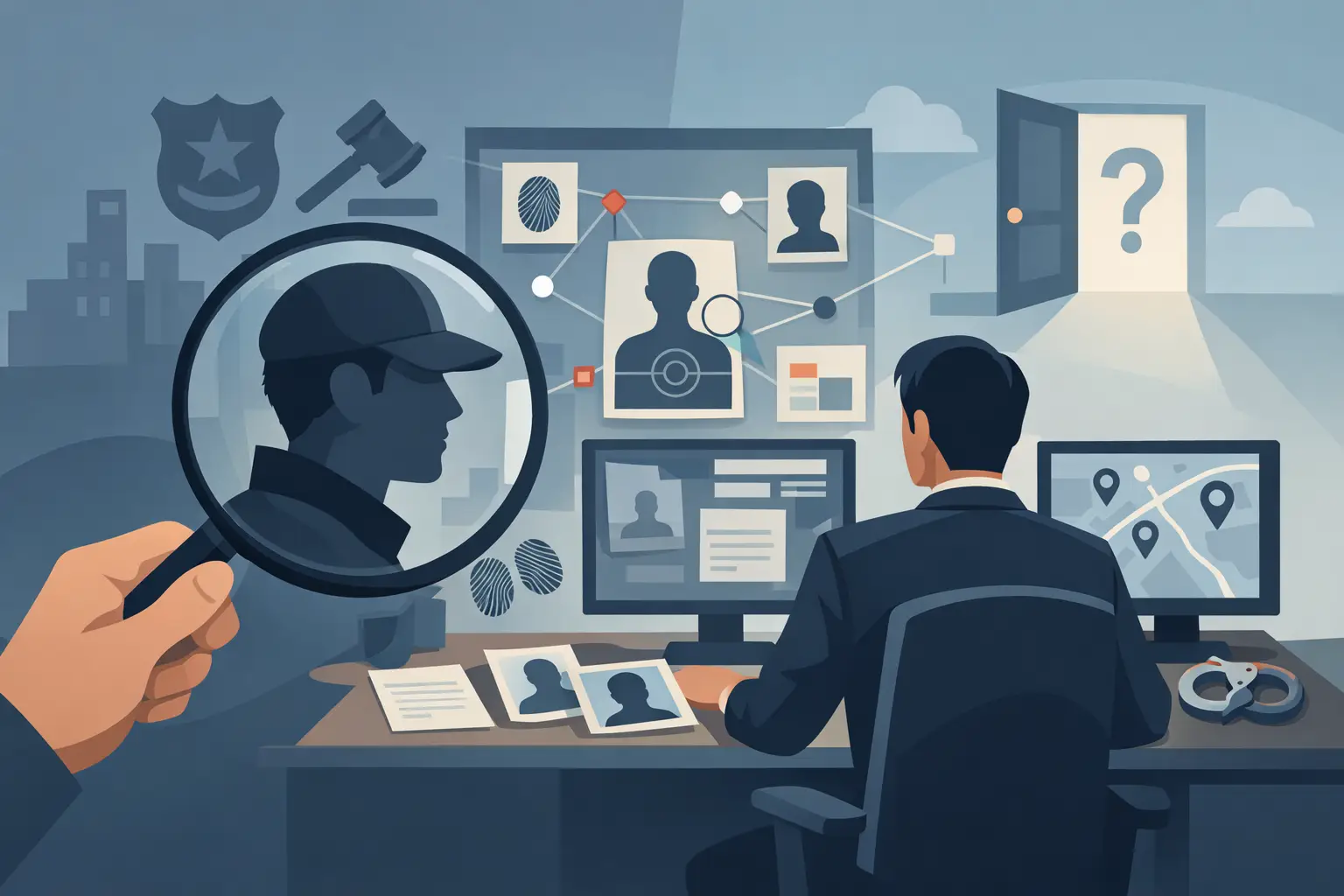
The idea of a criminal profiler is easy to romanticize. Popular media has turned the role into a mix of intuition, dramatic interviews, and instant breakthroughs. So when prospective students ask, is criminal profiling a real career, the honest answer is yes – but not in the simplified way most people imagine.
Criminal profiling exists as a legitimate professional function within the broader fields of behavioral analysis, criminal investigation, forensic psychology, intelligence, and threat assessment. What is less straightforward is the job title itself. Very few organizations hire large numbers of people under the exact title criminal profiler. In practice, professionals who perform profiling-related work often hold roles in law enforcement, behavioral analysis units, forensic mental health, investigative consulting, corrections, intelligence, or research.
Is criminal profiling a real career in practice?
Yes, but it is usually a specialization rather than a standalone entry-level profession. That distinction matters.
A person rarely begins a career by stepping directly into a high-profile profiling unit. More often, they build expertise first in criminal justice, psychology, investigations, forensic science, or behavioral research. Over time, they may move into work that involves offender behavior analysis, case linkage, interview strategy, risk assessment, victimology, or threat management.
This is one reason the field attracts serious graduate students and mid-career professionals. It rewards depth, not just interest. Agencies and organizations want professionals who can interpret behavior carefully, work with incomplete information, and communicate findings responsibly. They do not want cinematic guesswork.
What criminal profilers actually do
At its core, criminal profiling is the structured analysis of behavior to support investigations or prevention efforts. Depending on the setting, that may include reviewing crime scene patterns, studying victim selection, examining communication styles, assessing escalation risk, or identifying behavioral consistencies across incidents.
The work is rarely about naming one suspect out of thin air. More often, it helps narrow investigative focus, shape interview approaches, prioritize leads, and frame hypotheses about offender characteristics or motivations. In some contexts, it overlaps with threat assessment and violence prevention rather than traditional criminal investigation.
A professional doing this kind of work may contribute to:
- behavioral analysis of violent or serial offenses
- threat assessment in schools, workplaces, or public institutions
- interview and interrogation strategy
- case linkage analysis
- victimology and offender-victim dynamics
- intelligence interpretation related to human behavior
- forensic consultation for legal or correctional settings
That range is why the question is criminal profiling a real career cannot be answered with a simple job-board search. The field is real, but it sits inside a larger professional ecosystem.
Where these professionals work
Some work in local, state, or federal law enforcement. Others operate in corrections, probation, intelligence, national security, victim advocacy environments, or forensic mental health settings. Some contribute through academia, research centers, training institutions, or private consulting.
Internationally, the picture becomes even more varied. Different countries use different terminology, organizational structures, and credential expectations. In one system, the work may sit within behavioral science or investigative psychology. In another, it may be embedded in threat management or criminal intelligence. For globally minded learners, that makes foundational expertise especially valuable because the title may shift, while the underlying analytical competencies remain relevant.
The skills that matter more than the title
People are often drawn to criminal profiling because they are fascinated by criminal minds. That curiosity helps, but it is not enough.
The strongest professionals in this area are disciplined thinkers. They know how to evaluate evidence, separate patterns from assumptions, and work within ethical and legal boundaries. They are skilled in behavioral science, research methods, criminological theory, interviewing, and report writing. They also understand the limits of inference.
That last point is especially important. Behavioral analysis can support decision-making, but it should not replace evidence. The best practitioners are cautious, methodical, and transparent about uncertainty.
Behavioral science is the foundation
Criminal profiling depends on understanding human behavior in context. That includes personality, trauma, cognition, decision-making, social influence, stress responses, and situational pressures. It also requires awareness of how behavior can be misread when culture, environment, or mental health factors are ignored.
Investigative thinking is just as important
A profiler who does not understand casework, evidentiary standards, or investigative processes will struggle to be useful. Recommendations must fit the realities of real investigations. That is why many professionals enter this space after experience in policing, psychology, criminal justice, security, or related disciplines.
Education pathways into the field
There is no single academic route that guarantees a profiling role. That can feel frustrating, but it also means the field is open to more than one kind of professional background.
Some begin with criminal justice or criminology. Others come from psychology, forensic psychology, behavioral science, sociology, law enforcement studies, or intelligence analysis. At the advanced level, specialized graduate education can be particularly valuable because it helps students move beyond broad interest into structured expertise.
For adult learners, the best educational path is usually the one that connects theory with application. A serious program should expose students to case analysis, behavioral assessment, research literacy, ethics, and the practical demands of investigative environments. Faculty experience matters too. Practitioner-led instruction can narrow the gap between academic concepts and the decisions professionals face in the field.
This is where specialist institutions such as Evidentia University can speak directly to a growing market need. Learners are not just looking for a general credential. They are looking for advanced, relevant knowledge in behavioral and investigative sciences that can strengthen credibility and expand professional scope.
What the career path really looks like
For most people, criminal profiling is not a first job. It is a later-stage function built on previous experience.
A law enforcement officer may develop expertise in violent crime investigations and later move into behavioral analysis. A psychologist may focus on forensic assessment and contribute to offender or threat evaluation. An intelligence analyst may become highly skilled in behavioral indicators and pattern interpretation. A researcher may specialize in offender typologies, deception, or violence risk.
That is both the opportunity and the trade-off. The field is real, but it usually demands patience. There is no universal ladder, and advancement often depends on a combination of education, operational exposure, analytical rigor, and professional reputation.
Common misconceptions that mislead students
One misconception is that profilers solve cases alone. They do not. Effective behavioral analysis is collaborative and works best when integrated with investigative, forensic, and legal processes.
Another is that intuition is the main tool. In reality, the field depends on careful observation, data, theory, comparative analysis, and disciplined reasoning.
A third misconception is that every profiler works on serial homicide. Some do, but many work on threat assessment, workplace violence, domestic extremism, stalking, fraud behavior, offender interviewing, or institutional safety. The broader field of applied behavioral analysis is often more professionally accessible than the narrow image most people start with.
Is criminal profiling a good career choice?
That depends on what you want from your professional life.
If you want a glamorous title with a clear and easy hiring path, this may not be the right expectation. The field is competitive, specialized, and often indirect. If, however, you are motivated by behavioral complexity, investigative problem-solving, and the chance to contribute to public safety or organizational protection, it can be a deeply meaningful direction.
It is especially compelling for professionals who already work near this space and want to deepen their specialization. Law enforcement personnel, mental health professionals, intelligence practitioners, security specialists, and criminal justice graduates often find that advanced study in behavior sharpens their ability to interpret risk, support investigations, and make better decisions under pressure.
How to think about your next step
A better question than is criminal profiling a real career may be this: what role can behavioral expertise play in the career I want to build?
That shift in perspective opens more realistic and more powerful possibilities. You may pursue offender analysis, threat assessment, forensic interviewing, investigative psychology, intelligence work, corrections, or behavioral research. Each can place you close to the substance of profiling while offering a clearer professional pathway.
The professionals who thrive here are not chasing a television version of the job. They are building rare expertise at the intersection of human behavior and real-world decision-making. For ambitious learners, that is where the field becomes not just real, but professionally consequential.
If this path interests you, treat it with the seriousness it deserves. Study behavior deeply, choose training with practical credibility, and build the kind of expertise that organizations trust when the stakes are high.