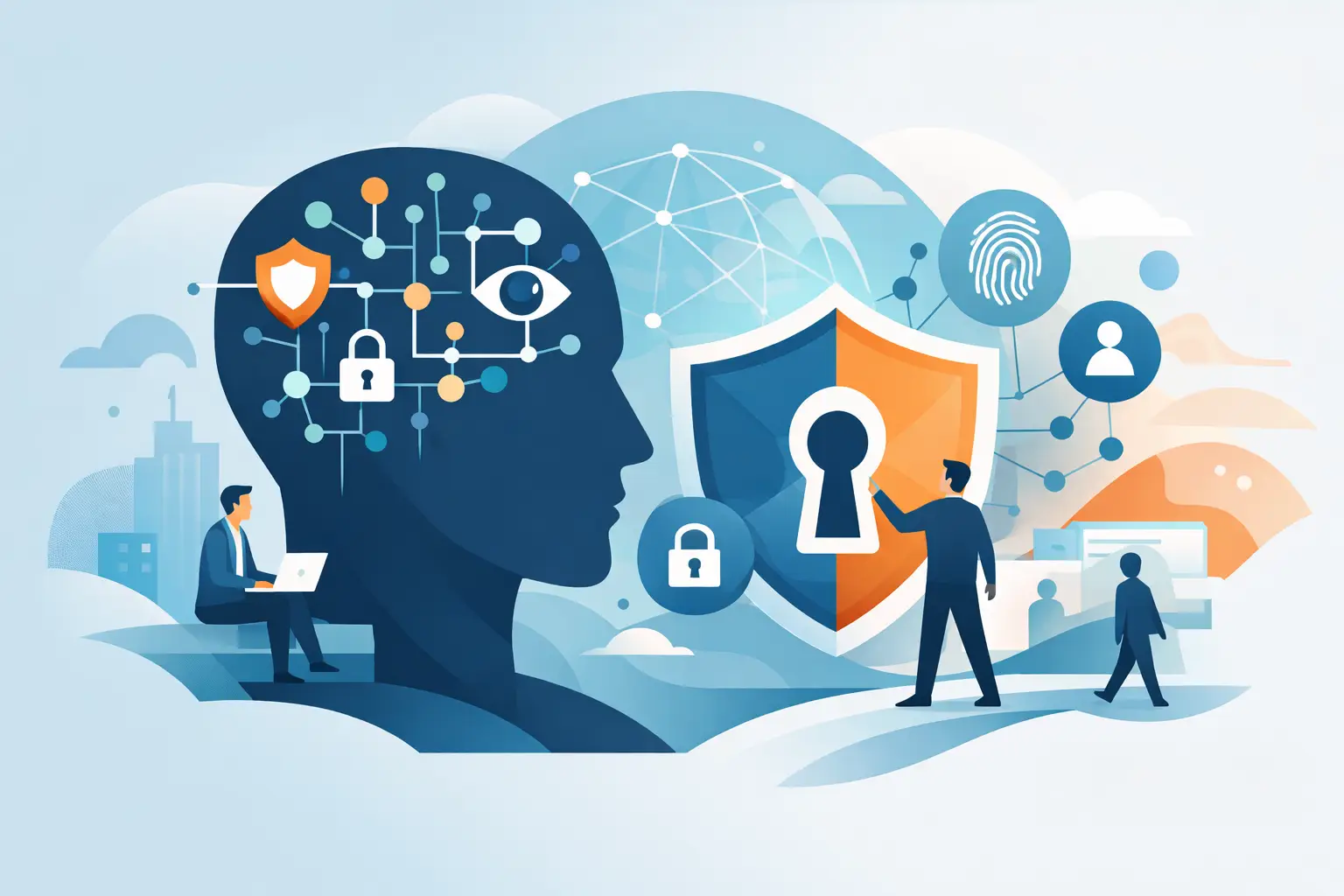
A valid password, a familiar device, and an approved location can still conceal a dangerous act. When an account is used at an unusual hour, accesses a sensitive record for no clear business reason, and sends data through an unfamiliar channel, the risk is not merely technical. It is behavioral. The future of behavioral cybersecurity will be shaped by an organization’s ability to understand those signals without reducing people to data points or treating every employee as a suspect.
Why cybersecurity is becoming a behavioral discipline
For years, security programs centered on securing the perimeter: networks, endpoints, applications, and credentials. Those controls remain essential, but the perimeter has changed. Hybrid work, cloud infrastructure, third-party platforms, and personal mobile devices have distributed access far beyond a single office or network.
At the same time, attackers have become more skilled at exploiting ordinary human decisions. They do not need to break encryption if they can persuade an employee to approve a fraudulent login. They do not need to defeat every control if they can pressure a finance professional into changing payment instructions. Social engineering works because it targets attention, trust, authority, urgency, and habit.
Behavioral cybersecurity addresses this reality. It examines how people interact with systems, how risk develops across a sequence of actions, and how an organization can intervene before a mistake becomes an incident. It combines cybersecurity practice with psychology, behavioral science, fraud analysis, investigative reasoning, and organizational culture.
This is not a claim that technology can accurately read intention. It cannot, and institutions should be cautious of anyone suggesting otherwise. The more credible objective is narrower and more useful: identify deviations from expected behavior, assess them in context, and give trained professionals better evidence for timely decisions.
The future of behavioral cybersecurity will be contextual
A single unusual action rarely proves malicious intent. An employee downloading a large volume of files may be preparing a client presentation, responding to an audit request, or attempting to remove proprietary information before leaving the company. The event gains meaning only when it is placed in context.
Behavioral security tools increasingly build baselines around patterns such as normal working hours, common applications, data access history, transaction behavior, communication patterns, and device usage. When a meaningful deviation occurs, systems can assign risk scores or trigger additional verification. The value lies in connecting signals that might otherwise appear harmless in isolation.
From alert volume to investigative judgment
Security operations centers are already overwhelmed by alerts. Adding behavioral analytics without clear investigative standards can make that problem worse. A model may identify anomalies, but a trained analyst must distinguish between an explainable change in work behavior and an emerging insider threat.
The next generation of programs will prioritize triage quality over signal quantity. Analysts will need to ask disciplined questions: What changed? Is there a legitimate operational explanation? What supporting evidence is available? What is the proportionate response? This approach moves behavioral cybersecurity away from automated suspicion and toward structured, evidence-based inquiry.
In high-risk sectors, this may involve collaboration among cybersecurity teams, fraud investigators, compliance leaders, legal counsel, and human resources. That collaboration is not always simple. Each function has different obligations, thresholds for action, and definitions of harm. Yet the complexity reflects the real nature of the problem: cyber risk is increasingly an organizational behavior challenge, not solely an IT issue.
AI will change both defense and deception
Generative AI is raising the quality and scale of deception. Phishing messages can now be tailored to a person’s role, writing style, region, and current projects. Voice cloning can imitate executives. Synthetic identities can appear credible across communications channels. As these methods spread, employees will face attacks that are less obviously fraudulent and more psychologically persuasive.
Behavioral cybersecurity can help organizations respond by looking beyond whether a message appears legitimate. It can examine the decision path around the message: Was a new payee added after an unusual request? Did a user approve multiple authentication prompts in a short period? Did an employee access a system outside their established workflow after receiving an urgent communication?
AI will also support defenders by finding patterns in large and complex datasets. But predictive tools bring trade-offs. A system trained on historical behavior can reproduce historical bias, particularly when it labels some work styles, locations, or job functions as inherently riskier. Human review, transparent governance, and ongoing model testing will be essential safeguards.
Privacy and trust are security requirements
Behavioral analytics can easily cross into intrusive monitoring. Organizations may be tempted to collect every keystroke, message, location signal, and productivity metric. That approach may create legal exposure, damage morale, and encourage employees to work around controls. It also mistakes surveillance for security.
A defensible program starts with purpose limitation. Collect the minimum information needed to address a clearly defined security risk. Define who can access the data, how long it will be retained, when investigations can be opened, and what review process applies to high-impact decisions. Employees should understand the principles governing security monitoring, even when specific detection methods must remain confidential.
Trust matters because people are often the first to notice a problem. An employee who fears punishment may hide a mistaken click or delayed report. An employee who believes the organization will respond fairly is more likely to report suspicious activity quickly. The most mature security cultures make reporting easy, normalize questions, and distinguish good-faith errors from reckless or malicious conduct.
This is especially relevant for global organizations. Privacy expectations, labor rules, and data protection laws differ across jurisdictions. A behavioral cybersecurity policy that may be permissible in one location can be inappropriate or unlawful in another. Programs need local awareness without sacrificing coherent enterprise standards.
Training must become decision training
Annual awareness modules have value, but they are rarely enough. Employees may remember that phishing exists while still struggling to recognize a convincing, role-specific request during a busy workday. Effective learning must focus on the moments when judgment is tested.
That means practicing how authority pressure works, why urgency narrows attention, and how cognitive overload leads people to bypass procedures. It means teaching employees to pause before approving an unexpected multifactor authentication request, verify payment changes through an independent channel, and report uncertainty without embarrassment.
The strongest programs also tailor learning to risk. A procurement team needs different scenarios than a researcher handling sensitive data. Executives face impersonation and travel-related threats. Developers confront risks involving code repositories, credentials, and software supply chains. Personalization should serve relevance, not become an excuse for excessive employee profiling.
For professionals entering or advancing in this field, technical fluency remains indispensable. Yet technical fluency alone is no longer sufficient. Security leaders need to understand influence, deception, decision-making under stress, investigative interviewing, digital ethics, and the organizational conditions that enable misconduct. These capabilities allow teams to design controls people can realistically follow.
The professionals who will lead this work
The future workforce will include specialists who can translate between cyber telemetry and human behavior. They may work in security operations, digital forensics, insider-risk management, fraud prevention, compliance, threat intelligence, or enterprise risk. Their central skill will be interpretation: turning fragmented information into a fair, proportionate, and actionable assessment.
This requires more than learning a new platform. It requires a disciplined understanding of evidence. A behavioral signal is not a verdict. Correlation is not causation. A security intervention should be calibrated to the confidence of the evidence and the potential consequences for the individual and the organization.
Advanced education has a meaningful role here. At Evidentia University, the intersection of behavioral sciences, forensic inquiry, and applied cybersecurity reflects a growing professional reality: protecting digital systems requires a sophisticated understanding of the people who use, defend, and sometimes exploit them.
Organizations will not eliminate human error, manipulation, or insider risk. They can, however, build environments where people are harder to deceive, safer to speak up, and better supported in making sound decisions. That is the practical promise of behavioral cybersecurity: not more suspicion, but more intelligent protection guided by human judgment.