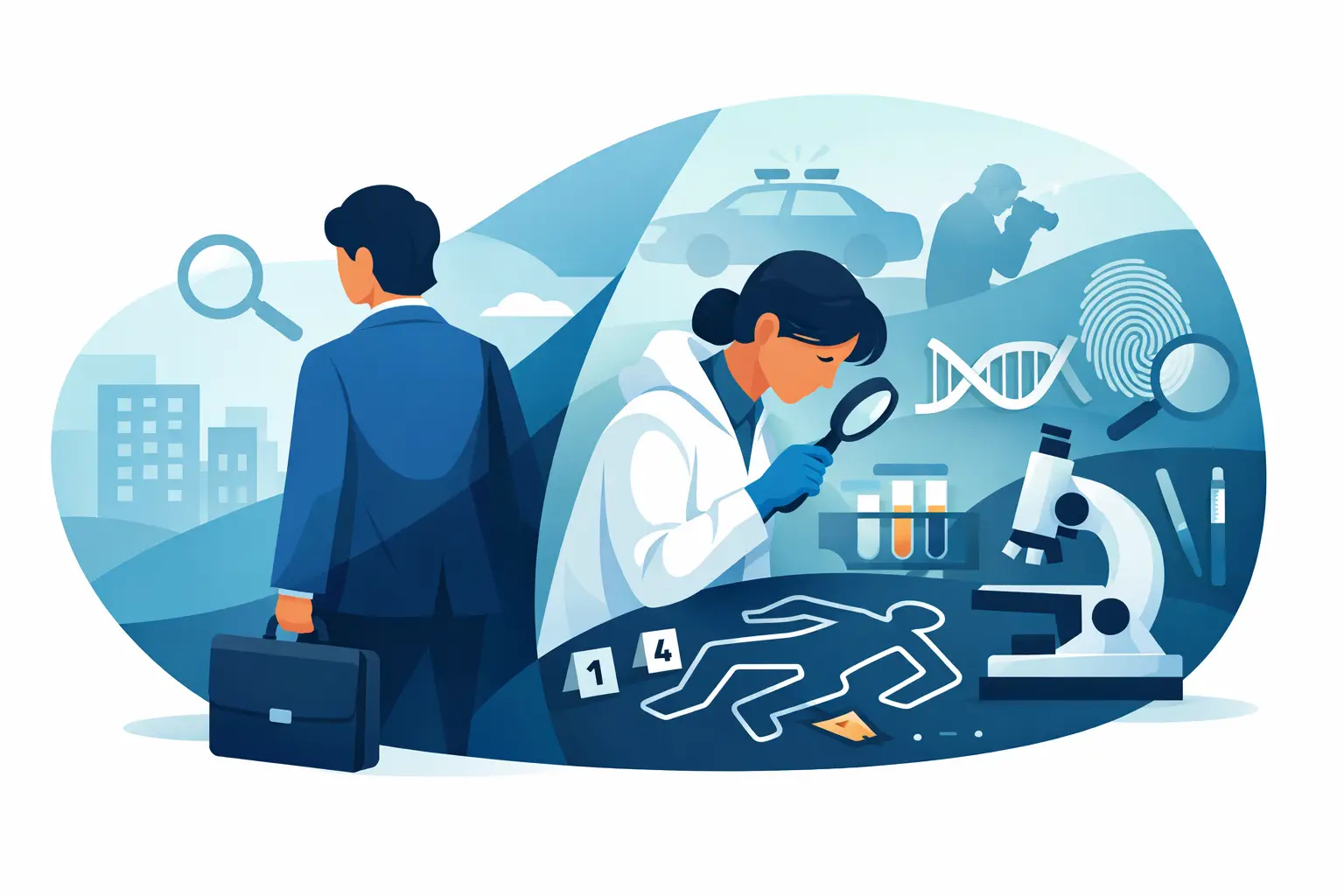
A career change into forensic science rarely begins in a laboratory. More often, it starts with a professional who has spent years in law enforcement, psychology, healthcare, security, compliance, education, or criminal justice and realizes that the most compelling part of the job is analysis – interpreting behavior, evaluating evidence, identifying patterns, and contributing to truth with greater precision.
That instinct matters. Forensic science is not a single job title, and it is not limited to television versions of crime scene work. It is a multidisciplinary field that relies on scientific reasoning, investigative discipline, behavioral insight, and ethical judgment. For adult learners considering a serious professional pivot, that makes it both promising and demanding.
What a career change into forensic science really involves
The first misconception to leave behind is that forensic science is one narrow pathway. In practice, the field includes laboratory analysis, digital forensics, forensic psychology, crime analysis, fraud investigation, forensic interviewing, behavioral assessment, and other specialized functions that support justice systems, public safety agencies, legal teams, and private-sector investigations.
For that reason, a career transition into this space is usually less about starting over and more about redirecting existing expertise. A police professional may move toward intelligence or behavioral analysis. A psychology graduate may pursue forensic assessment or investigative interviewing. A cybersecurity specialist may shift into digital evidence and incident investigation. A compliance professional may find a strong fit in anti-fraud or financial inquiry.
The strongest candidates do not simply ask, “How do I get into forensics?” They ask a better question: “Where does my current experience intersect with forensic work, and what advanced training will make that transition credible?”
Why mid-career professionals are often strong candidates
Forensic work rewards maturity. It requires careful documentation, restraint in interpretation, respect for procedure, and comfort operating in high-stakes environments. These qualities are often more developed in experienced professionals than in early-career applicants.
A teacher may bring exceptional interviewing and observation skills. A nurse may already understand trauma, evidence handling, and structured reporting. A human resources leader may have deep experience in workplace investigations, deception indicators, and policy-based decision-making. Someone from military or intelligence backgrounds may already think in terms of threat assessment and situational analysis.
What changes is the framework. In forensic settings, your judgment must be supported by methods, standards, and specialized domain knowledge. That is where formal education becomes decisive.
The backgrounds that translate best
Several professional backgrounds tend to align naturally with forensic science, though fit depends on the role you want.
Criminal justice and law enforcement professionals often transition well because they understand investigative structures, legal procedures, and evidentiary sensitivity. Psychologists, counselors, and behavioral science professionals may be especially well positioned for forensic psychology, interviewing, offender analysis, or victim-related work. Those in IT, cybersecurity, and data analysis can move into digital forensics, cybercrime investigation, and fraud detection. Professionals in accounting, finance, and compliance may find strong pathways in anti-fraud analysis and white-collar investigations.
Even so, transferability is not automatic. Practical experience helps, but employers and institutions alike will look for evidence that you understand the forensic context, not just the adjacent profession.
Education matters – but the right education matters more
This is where many career changers make either a smart investment or an expensive mistake. Generic degrees may broaden knowledge, but they do not always build a clear professional bridge into forensic roles. If your goal is career mobility, the program should do more than award credentials. It should sharpen your specialization, connect theory to real investigative practice, and reflect how the field actually operates.
Forensic science, particularly at the graduate level, rewards focused study. A strong academic pathway should expose you to research methods, ethical and legal frameworks, case-based analysis, and practitioner perspectives. For some learners, that means a master’s degree. For others, a graduate certificate or continuing education sequence may be the better first move, especially if they are testing fit before committing to a longer program.
It also depends on your destination. If you want to enter a highly technical laboratory role, you may need specific scientific prerequisites. If your interests center on behavioral forensics, investigative psychology, interviewing, or fraud analysis, the educational path may look different. Precision matters.
How to assess whether forensic science is the right pivot
Before enrolling anywhere, spend time clarifying your target role. The field is too broad for vague ambition. If you say you want “to work in forensics,” that is a starting point, not a plan.
A better approach is to identify the type of problems you want to solve. Do you want to analyze digital evidence? Understand criminal behavior? Support investigative interviews? Evaluate risk? Work on fraud, cybercrime, or intelligence? Once that becomes clear, the path forward gets sharper.
You should also assess your tolerance for the realities of the field. Some roles are emotionally demanding. Others are highly technical. Many require exacting documentation and strict procedural discipline. The work can be meaningful and intellectually rich, but it is not glamorous. People who thrive in forensic careers usually value rigor more than excitement.
Skills you may need to build before the transition
Most career changers already possess some relevant strengths, but gaps are common. Scientific literacy, data interpretation, academic writing, and research methods often need strengthening, especially for professionals returning to education after years in the workforce.
Communication is equally important. Forensic professionals must often explain complex findings clearly to non-specialists, whether in reports, investigations, cross-functional teams, or legal settings. Precision in language is not optional.
Then there is ethical reasoning. In forensic and behavioral disciplines, overconfidence can be dangerous. Good training teaches not only what can be inferred, but also what cannot. That distinction is central to professional credibility.
What employers tend to look for
The exact requirements vary by sector, but most employers evaluate some combination of domain knowledge, analytical discipline, communication skill, and professional judgment. They want to know whether you can operate within standards, not merely whether you are fascinated by crime or human behavior.
That is why a successful pivot often combines three elements: relevant prior experience, specialized academic training, and a coherent professional narrative. Your resume should tell a believable story. If you have worked in policing, psychology, security, compliance, or cyber operations, explain how that experience led you toward a specific forensic specialization. When supported by graduate-level education, that story becomes much stronger.
For adult learners, online specialist institutions can be especially valuable because they allow professionals to build that expertise without stepping away from work. At Evidentia University, this model is particularly relevant for students seeking advanced education in forensic and behavioral sciences from faculty with real practitioner backgrounds. For many career changers, that balance of academic rigor and applied relevance is exactly what makes a transition feasible.
Common mistakes during a career change into forensic science
One common mistake is choosing a program based on broad appeal rather than career fit. Another is assuming passion alone will substitute for technical competence. A third is underestimating how specialized the field can be.
There is also a tendency to pursue credentials without building a professional identity. If your studies, prior experience, and future goals do not align, employers may struggle to place you. The most effective transitions are intentional. They show not only that you are qualified to learn, but that you understand where you belong in the field.
Patience also matters. Some pivots happen quickly, but others are staged over time through graduate study, targeted certifications, research, and applied experience. Not every move needs to be immediate to be strategic.
Building a realistic transition plan
A strong plan usually begins with role clarity, followed by an honest skills assessment. From there, the next step is selecting education that matches both your professional level and the niche you want to enter. Mid-career professionals often benefit from programs that are academically serious but designed for working adults, with direct relevance to investigation, behavior, and evidence-based practice.
As you study, refine your professional language. Learn how the field defines terms, evaluates claims, and distinguishes expertise from opinion. Seek out case-based learning, practitioner-led instruction, and opportunities to engage with a serious academic community. Those experiences help you think like a forensic professional before you hold the title.
The goal is not simply to enter a new field. It is to enter it with credibility.
For the right professional, forensic science is not a dramatic reinvention. It is a disciplined evolution – one that turns prior experience into sharper expertise and gives your work a more exacting kind of impact.