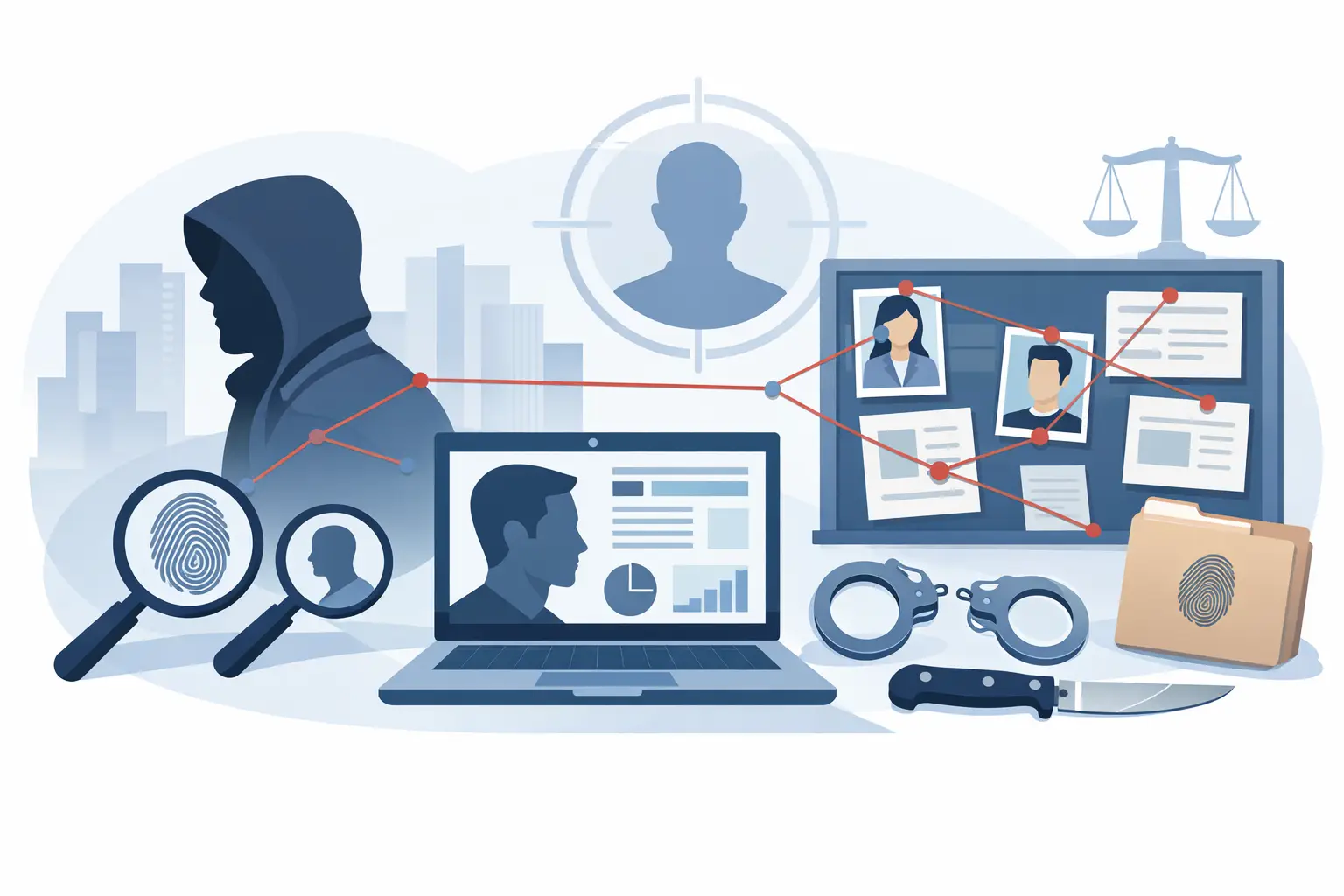
Choosing among the best criminal profiling courses online is not really about finding the flashiest syllabus. It is about finding a program that treats profiling as a serious behavioral science discipline rather than entertainment dressed up as education. For professionals in law enforcement, psychology, security, criminology, or compliance, that distinction matters. A credible course can sharpen analytical judgment. A weak one can leave you with catchy terminology and very little operational value.
Criminal profiling attracts attention because it sits at the intersection of psychology, investigation, and decision-making under uncertainty. That also makes it easy to misrepresent. Many online offerings promise insider methods, forensic secrets, or instant expertise. In practice, the strongest programs are usually more disciplined than dramatic. They teach behavioral analysis, criminal psychology, victimology, threat assessment, interviewing, research interpretation, and investigative reasoning. They also make clear where profiling helps, where it does not, and how it should be used alongside evidence rather than in place of it.
What makes the best criminal profiling courses online
The best criminal profiling courses online tend to share a few characteristics. First, they are grounded in established academic fields such as psychology, criminology, forensic science, and behavioral research. Second, they are taught by people with both scholarly and professional credibility. Practitioner experience matters, but so does the ability to explain methods, limits, and competing theories with precision.
Third, the strongest programs avoid sensationalism. If a course markets profiling as a near-mystical ability to read offenders instantly, that is a warning sign. Real profiling work is slower and more structured. It involves pattern recognition, case analysis, statistical reasoning, and interpretation of behavior within context. Good education reflects that complexity.
Finally, the right course depends on your goal. A short certificate may be enough if you want continuing education or exposure to behavioral analysis. If you want deep expertise, professional credibility, or a pathway into leadership or specialization, a graduate-level program is usually the stronger choice.
How to compare criminal profiling programs
Academic depth should come first. Some courses are introductory and are designed for general interest learners. Others are built for professionals who need to apply behavioral concepts in investigations, intelligence, threat management, interviewing, or forensic assessment. Neither is inherently wrong, but they serve different purposes.
Faculty background is the next differentiator. Courses led by former investigators, forensic psychologists, criminologists, and behavioral scientists often provide more practical and intellectually rigorous instruction than generic online platforms. The best teaching teams bring both field experience and methodological discipline.
You should also look at the structure of the learning experience. A self-paced video course can be useful for flexibility, but it may offer limited feedback, discussion, or assessment. A university-based online course or graduate certificate typically gives you stronger academic support, more demanding assignments, and a clearer sense of progression. That matters if you want the credential to carry weight beyond personal interest.
Cost deserves a more nuanced view than simple price comparison. A low-cost course may be perfectly reasonable for introductory learning. But if you are evaluating long-term career value, the more useful question is whether the instruction is credible, whether the curriculum is coherent, and whether the credential signals serious preparation.
11 best criminal profiling courses online to consider
The online market is broad, so the best approach is to sort options by seriousness, format, and intended outcome.
1. Graduate certificates in criminal profiling or behavioral analysis
For working professionals, graduate certificates are often the strongest balance between specialization and flexibility. They usually go beyond broad survey material and focus on applied behavioral interpretation, investigative psychology, offender patterns, and case-based reasoning. They also tend to attract students who want career relevance rather than casual curiosity.
2. Master’s programs with a criminal profiling concentration
If you want depth, a master’s-level path is hard to ignore. These programs generally place profiling within a broader framework of forensic behavioral science, research methods, criminal behavior, and applied investigation. That wider foundation is valuable because effective profiling rarely stands alone as a professional function.
3. University continuing education courses in forensic psychology
Some of the best criminal profiling courses online are not labeled as profiling first. They may sit under forensic psychology or behavioral investigation. That can actually be a strength. The field is richer when it includes cognition, psychopathology, victimology, and the interpretation of behavior within legal and investigative settings.
4. Practitioner-led certificate programs in behavioral analysis
These can be compelling when the instructors have genuine investigative and analytical experience. The strongest versions translate field knowledge into teachable frameworks instead of relying on war stories. The weaker versions lean too heavily on anecdotes and offer little academic scaffolding.
5. Criminal psychology certificates
A criminal psychology certificate can be a smart option if your goal is understanding offender behavior rather than learning investigative profiling in a narrow sense. These courses are especially relevant for professionals in corrections, mental health, victim services, and justice-related policy roles.
6. Investigative interviewing and statement analysis courses
Profiling is often discussed as if it begins and ends with offender typologies. In reality, it is deeply connected to interviewing, verbal analysis, and behavioral observation. Courses in this area can strengthen practical judgment, especially for investigators and security professionals.
7. Threat assessment programs
For some learners, threat assessment is more professionally useful than traditional criminal profiling. It focuses on risk indicators, behavioral escalation, pathway analysis, and prevention. If you work in schools, workplaces, executive protection, public safety, or security, this may be the more strategic investment.
8. Specialized homicide or violent crime analysis courses
These programs can offer focused insight into offense patterns, scene behavior, victim selection, and offender decision-making. Their value depends heavily on how evidence-based the instruction is. The better courses connect case analysis to tested frameworks rather than cinematic narratives.
9. Self-paced online courses from major learning platforms
These are attractive because they are accessible and inexpensive. They can work well as an entry point if you want orientation before committing to graduate study. The trade-off is that academic rigor, assessment quality, and credential value are often limited.
10. Professional training through law enforcement or security organizations
These offerings may be highly practical for current practitioners. They often emphasize operational application, threat recognition, and investigative support. Their limitation is that they may assume prior experience and may not provide the broader theoretical foundation that helps professionals adapt across contexts.
11. Specialist online programs in forensic and behavioral sciences
This category often provides the most coherent education because profiling is taught within a larger ecosystem of human behavior, investigative science, and applied research. Institutions such as Evidentia University are notable here because they approach the subject as an advanced behavioral discipline, supported by practitioner-led instruction and graduate-level expectations rather than popular fascination.
Who should choose a short course, and who needs a degree?
A short online course makes sense if you are exploring the field, adding continuing education, or looking for a focused skill area such as threat assessment or interviewing. It can also work for professionals who already have strong backgrounds in criminal justice, psychology, or security and want a targeted update.
A degree or graduate certificate is the better route if you are building specialization, changing career direction, or seeking a credential that reflects substantial academic and professional preparation. This is especially true for learners who want to move into leadership, consulting, applied behavioral analysis, or interdisciplinary forensic roles.
The key question is not whether a shorter course is enough in the abstract. It is whether it is enough for your next step. If your ambitions are modest, a concise program may be efficient. If your ambitions are serious, depth becomes part of the value.
Red flags to watch for
If a course promises that you will think exactly like elite profilers after a few hours of content, be cautious. If the curriculum is vague, the faculty are hard to verify, or the material relies heavily on notorious cases without teaching method, be cautious again.
Another red flag is false certainty. Ethical, modern profiling education should acknowledge ambiguity. Behavioral evidence can guide hypotheses, narrow possibilities, and support investigations, but it does not replace physical evidence, witness testimony, digital forensics, or sound case procedure. Programs that teach this balance are usually the ones worth trusting.
Choosing the right fit for your career
The best criminal profiling courses online are the ones aligned with what you actually need to do in the real world. A police investigator may need applied case analysis and interviewing. A psychologist may need stronger forensic context. A security leader may benefit more from threat assessment and behavioral risk detection. A graduate student may need research depth and academic credibility.
That is why prestige alone is not enough, and convenience alone is not enough either. The strongest choice sits where intellectual rigor, practitioner relevance, and career alignment meet. When you find a program that treats criminal profiling as a disciplined field of study instead of a dramatic label, you are far more likely to gain knowledge that stays useful long after the course ends.
A good course should leave you with better questions, sharper judgment, and a more disciplined way of interpreting behavior. That is the standard worth aiming for.