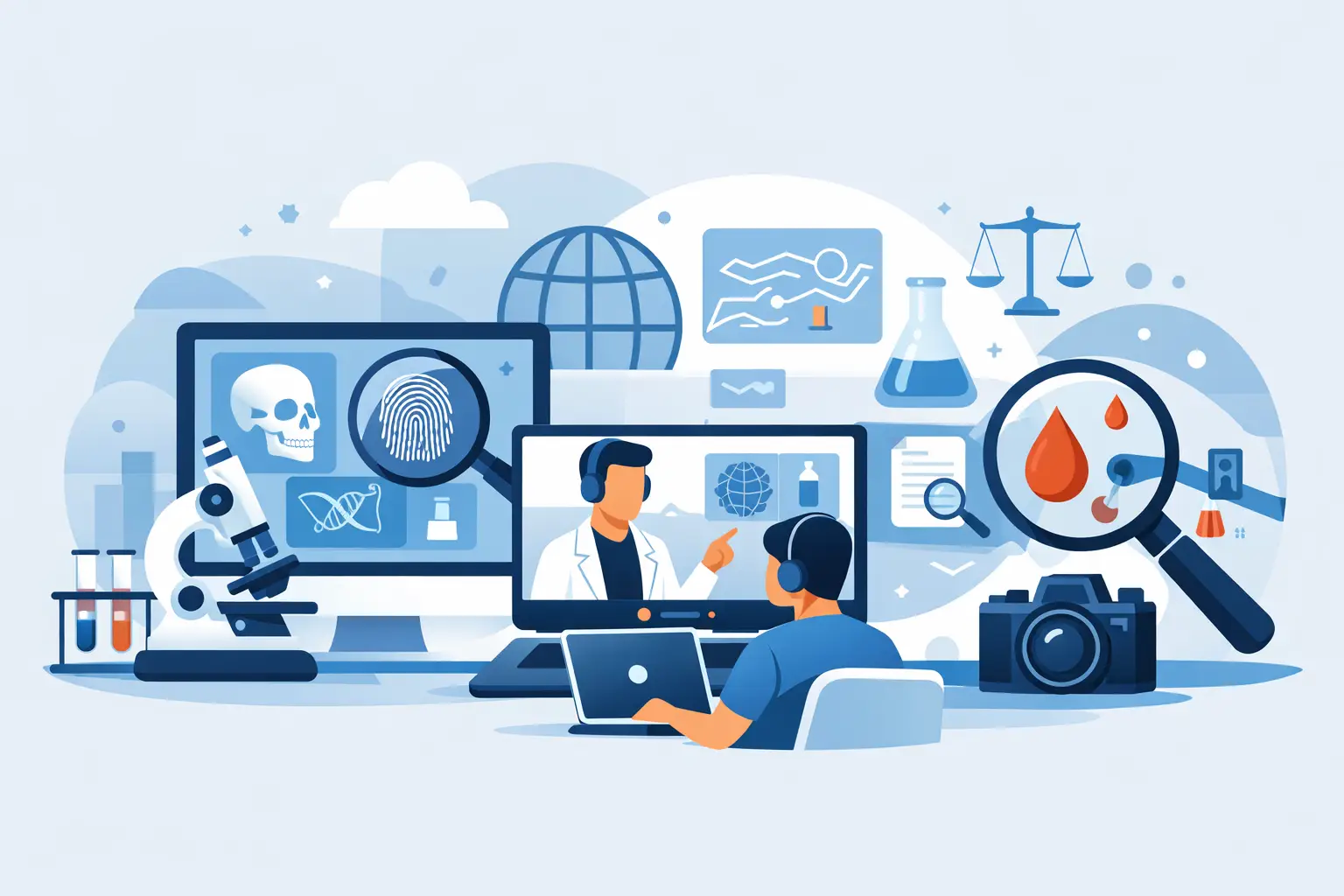
A strong forensic education does not begin in a lab. It begins with how you think – how you evaluate evidence, question assumptions, and connect scientific method to real investigative contexts. If you are asking how to study forensic science online, the real question is not whether digital learning can work. It is whether your program, your habits, and your professional goals are aligned closely enough to make that learning meaningful.
For adult learners and working professionals, online study can be an advantage rather than a compromise. It offers access to specialized faculty, international perspectives, and career-relevant coursework that may not exist locally. But forensic science is not a casual subject. It requires discipline, scientific literacy, ethical judgment, and a serious commitment to applied learning.
How to study forensic science online with the right expectations
The first step is to understand what online forensic study can and cannot do. A high-quality online program can develop your analytical thinking, strengthen your understanding of evidence, expose you to investigative frameworks, and deepen your grasp of criminology, psychology, law, and scientific reasoning. It can also prepare you for advancement in fields connected to investigations, intelligence, compliance, behavioral analysis, and criminal justice.
What it may not do, depending on the program, is replicate every hands-on laboratory experience associated with traditional bench science. That distinction matters. For some students, especially those seeking broader forensic knowledge, investigative specialization, or graduate-level interdisciplinary study, online learning is an excellent fit. For others pursuing highly specific lab-based roles, the right path may involve a blend of online theory and in-person technical training.
That is why choosing the right academic focus matters more than choosing a trendy format. Forensic science is a broad field. Some programs emphasize laboratory methods and evidence analysis. Others focus on forensic psychology, criminal profiling, cyber investigations, fraud analysis, interviewing, or the behavioral side of investigative work. Studying online works best when you know which part of the field you want to build into your career.
Start with the specialization, not just the degree title
Many prospective students search by degree label alone and miss the deeper question: what kind of forensic professional are you becoming? A generic program may sound appealing, but specialization often creates stronger professional value.
If your background is in law enforcement, criminal justice, or security, you may benefit from coursework that sharpens investigative reasoning and behavioral interpretation. If you work in psychology, victim services, or social science, a program that connects human behavior to forensic contexts may be more relevant than one centered only on laboratory procedures. If you are moving from compliance, fraud prevention, or cybersecurity, you may need a curriculum that bridges technical evidence with decision-making and risk analysis.
The strongest online learners choose programs that reflect where they are headed, not just where they have been. That means reviewing curriculum carefully. Look beyond the homepage language and read course topics, faculty profiles, assessment methods, and expected learning outcomes. A serious forensic education should show intellectual depth, not just broad promises.
What a credible online forensic program should include
Academic rigor is the first benchmark. You want a program that expects graduate-level reading, structured analysis, and disciplined writing. Forensic study is built on precision. If the coursework feels thin, overly generic, or disconnected from professional practice, that is a warning sign.
Faculty quality is just as important. In a field shaped by evidence, procedure, and expert interpretation, instructor experience matters. Programs taught by practitioners with backgrounds in policing, federal investigations, psychology, criminology, research, or forensic analysis tend to bring a different level of relevance to the virtual classroom.
You should also pay attention to whether the curriculum connects theory to application. Good online forensic education does not simply deliver information. It trains you to assess case material, interpret behavior, understand evidentiary standards, and think within legal and ethical boundaries.
Build a study method that matches forensic work
Students often assume success online depends mostly on time management. Time management matters, but forensic science demands something more exacting: structured analysis. You need a study approach that reflects the way professionals in this field work.
Start by reading actively rather than passively. When reviewing material, separate facts, methods, interpretations, and limitations. Ask what is known, what is inferred, what evidence supports the claim, and what alternative explanations may exist. That habit strengthens both academic performance and professional judgment.
Next, keep a case-based notebook. Even in theory-heavy courses, organize your notes around applied questions. What was the investigative issue? What evidence framework was used? What scientific or behavioral principles were involved? What procedural or ethical concerns emerged? This method helps you retain concepts in context, which is essential in forensic study.
Short, frequent study sessions also tend to work better than occasional long sessions. Forensic topics often involve layered material – law, methodology, ethics, psychology, statistics, or evidentiary interpretation. Spacing your work across the week gives you time to absorb complexity rather than rushing toward surface-level familiarity.
How to study forensic science online when you are working full time
For many adult learners, the real challenge is not intellectual ability. It is cognitive switching. You may move from professional responsibilities to coursework late at night, then back to work early the next morning. That pattern can erode concentration if you do not create structure.
The most effective approach is to assign different kinds of academic work to different energy levels. Use your highest-focus hours for reading dense material, writing analytical responses, or engaging in discussion posts that require interpretation. Save lower-energy periods for review, note organization, lecture playback, or citation tasks.
It also helps to establish a weekly forensic routine rather than a general study routine. Monday might be for reading and annotation, Wednesday for discussion and concept review, Saturday for written assignments and case analysis. Repetition reduces decision fatigue.
Do not underestimate the value of academic community either. Online learning is more sustainable when you participate actively. Discussion forums, faculty feedback, webinars, and peer exchanges can sharpen your thinking and prevent the isolation that causes many online students to disengage.
Treat digital learning as professional formation
One of the biggest mistakes students make is treating online education as content consumption. In forensic science, that mindset limits growth. You are not simply collecting information. You are developing a professional lens.
That means your assignments should become part of your long-term intellectual portfolio. Save strong papers, case analyses, research summaries, and presentations. Track recurring themes that align with your interests, whether that is violent behavior, deception, cybercrime, fraud, victimology, investigative interviewing, or forensic psychology. Over time, these academic outputs can clarify your specialization and support future advancement.
A serious online institution should reinforce this kind of professional formation. At Evidentia University, for example, the value of online graduate education lies not only in flexibility, but in access to a specialist academic environment shaped by forensic and behavioral expertise, practitioner-led instruction, and global perspectives on investigative sciences.
Know the trade-offs before you commit
Online forensic study offers reach, flexibility, and access to niche expertise. Those advantages are significant, especially for professionals who cannot relocate or pause their careers. But flexibility is not the same as ease.
You will need self-direction. You will need to read closely, write clearly, and engage seriously even when no one is physically in the room with you. You may also need to supplement your learning depending on your goals. A student pursuing behavioral or investigative specialization may thrive fully online. A student aiming for a highly technical lab pathway may need additional in-person experience later.
That is not a weakness in online education. It is simply part of choosing an academically honest path. The best decision is the one that matches your intended role, your prior background, and the type of forensic expertise you want to claim with confidence.
Make your program choice with the end in mind
If you are evaluating how to study forensic science online, start by defining success in concrete terms. Do you want to deepen expertise in criminal behavior? Strengthen your qualifications for investigative work? Move into forensic psychology, fraud analysis, cybersecurity, or applied behavioral science? Prepare for leadership in justice, security, or research settings?
When that goal is clear, the path becomes easier to assess. You can judge programs by rigor, relevance, faculty distinction, and practical alignment rather than by convenience alone. That is where strong decisions are made.
Forensic science asks for disciplined minds and ethically grounded professionals. Online education can help shape both, provided you choose with care and study with intention. The students who gain the most are usually the ones who approach the experience not as a shortcut, but as a serious step toward work that carries real consequence.