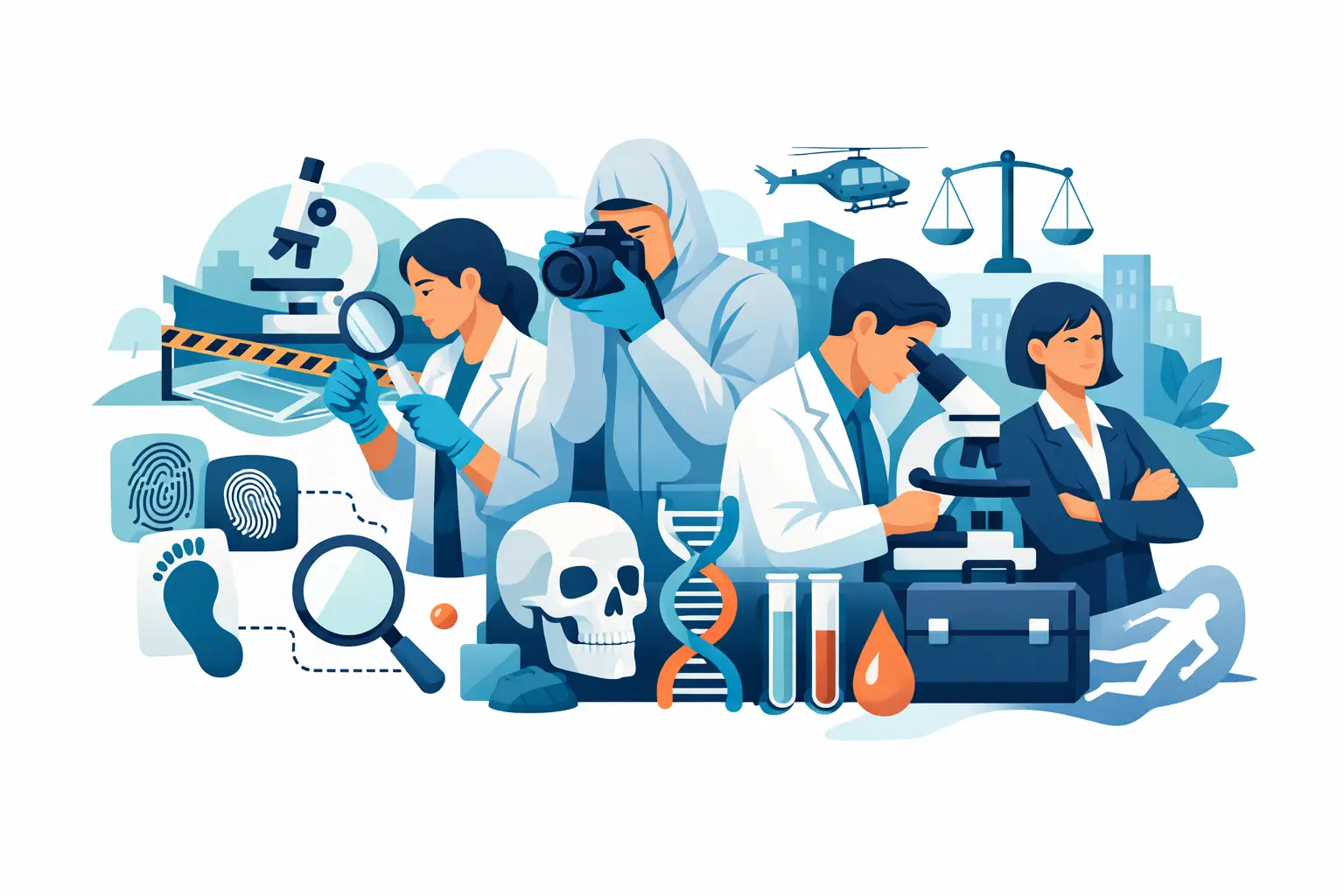
The phrase best careers in forensic science sounds simple until you look closely at what the field actually includes. A crime lab analyst, a digital forensics examiner, a forensic psychologist, and a fraud investigator may all work with evidence, but their daily work, training paths, and long-term opportunities can look entirely different. That is exactly why choosing well matters. In forensic science, prestige alone is not enough. The strongest career move is the one that aligns your analytical strengths, tolerance for pressure, and appetite for specialized graduate study.
What makes the best careers in forensic science?
The best roles are not defined by television-style excitement. They are defined by professional fit, demand, advancement potential, and the significance of the work itself. Some professionals want laboratory precision and method validation. Others are drawn to interviewing, behavioral assessment, intelligence analysis, or cyber investigations. For some, the best path is public service inside a government agency. For others, it is private sector consulting, corporate investigations, or expert analysis.
This is also a field where specialization tends to matter more over time. Entry-level opportunities exist, but advancement often follows deep expertise. The professionals who build durable careers are usually those who combine technical competence with a clear niche, whether that niche is toxicology, forensic accounting, digital evidence, or behavioral analysis.
10 best careers in forensic science to consider
1. Forensic scientist or crime lab analyst
This is the role many people picture first, and for good reason. Crime lab analysts examine physical evidence such as biological samples, trace materials, firearms evidence, or controlled substances. Their work supports investigations through careful testing, documentation, and courtroom reporting.
It remains one of the best careers in forensic science for individuals who thrive on scientific rigor. The trade-off is that the work can be highly procedural. If you want constant field activity, this may feel narrow. If you value precision, reproducibility, and evidentiary integrity, it can be deeply rewarding.
2. Digital forensics examiner
As criminal and civil investigations increasingly involve phones, laptops, cloud platforms, and hidden data trails, digital forensics has become one of the most strategically important specialties in the field. Examiners recover, preserve, and analyze digital evidence while maintaining strict chain-of-custody standards.
This path suits professionals who are both technically minded and investigative. It also offers flexibility across sectors, including law enforcement, cybersecurity, legal services, intelligence, and corporate risk. The challenge is that tools and threats evolve constantly, so continuing education is not optional. It is part of the profession.
3. Forensic psychologist
Forensic psychology sits at the intersection of human behavior and the legal system. Depending on the role, professionals may conduct competency evaluations, assess risk, support criminal investigations, consult on interviewing, or provide expert testimony.
This is an especially strong option for those interested in behavior rather than bench science. It demands intellectual discipline and ethical maturity because the consequences of assessment can be significant. For learners drawn to applied behavioral science, this path offers unusual depth and real social impact.
4. Forensic accountant or fraud investigator
Not every forensic investigation begins with blood spatter or DNA. Some begin with irregular transactions, missing funds, procurement anomalies, or manipulated records. Forensic accountants and fraud investigators trace financial evidence to identify misconduct, support litigation, and strengthen compliance systems.
This role is often overlooked by students who associate forensic science only with traditional criminalistics. That is a mistake. Financial crime is global, sophisticated, and expensive. For professionals with strengths in accounting, auditing, regulation, or corporate investigations, this can be one of the most stable and high-value career tracks available.
5. Forensic toxicologist
Forensic toxicologists analyze biological samples to detect alcohol, drugs, poisons, and other substances that may affect cause of death, impairment, or criminal responsibility. Their work is central in overdose cases, DUI investigations, postmortem examinations, and workplace incidents.
It is highly specialized and scientifically demanding. For that reason, it tends to appeal to those who enjoy chemistry, pharmacology, and methodical interpretation. The work can be repetitive at times, but it carries serious evidentiary weight and strong professional relevance.
6. DNA analyst
DNA analysis remains one of the most recognized and influential areas of forensic science. Analysts process biological evidence, generate profiles, compare results, and contribute to investigative leads or exclusions.
This role is ideal for detail-oriented professionals who want to work in one of the most technically established branches of the field. However, the visibility of DNA work can create misconceptions. It is not instant and rarely dramatic. It requires patience, quality control, and absolute care in interpretation. For many, that level of disciplined responsibility is exactly the appeal.
7. Crime scene investigator
Crime scene investigators document and collect physical evidence at scenes ranging from burglaries to homicides. They photograph, measure, sketch, recover, and preserve evidence for later laboratory analysis and courtroom use.
For people seeking fieldwork, this can be one of the most compelling options. It offers direct involvement in investigations and a strong sense of operational purpose. The trade-off is exposure to unpredictable schedules, emotionally difficult scenes, and physical demands. It is a meaningful path, but not one to choose lightly.
8. Forensic document examiner
Document examiners evaluate handwriting, signatures, altered documents, printed materials, and suspected counterfeits. Their work appears in criminal cases, civil disputes, fraud investigations, and authentication matters.
It is a more niche career, which can be an advantage for professionals who want specialized expertise with less competition in broader applicant pools. Success in this area depends on patience and observational precision. It may not have the profile of DNA or digital forensics, but it remains valuable where authenticity and authorship are disputed.
9. Behavioral analyst or criminal profiler
Behavioral analysis is one of the most intellectually demanding paths adjacent to forensic science. Professionals in this area study patterns in conduct, communication, victimology, and offender decision-making to support investigations, threat assessment, and strategic analysis.
This field attracts enormous interest, but it is often misunderstood. Very few roles consist solely of profiling. Most serious behavioral careers are built on a wider base of investigative, psychological, intelligence, or research expertise. For the right candidate, though, it can be one of the most distinctive and influential ways to work within forensic and investigative science.
10. Medicolegal death investigator
Medicolegal death investigators work closely with medical examiners or coroners to investigate sudden, unexpected, or unattended deaths. They gather scene information, interview witnesses, coordinate with families, and help establish the context needed for formal death determination.
This is a career for professionals who can combine sensitivity with composure. The work is both technical and human. It involves evidence, timelines, and reporting, but also grief, ambiguity, and public trust. For those called to serious service, it can be one of the most meaningful roles in the field.
How to choose the right forensic science career
The better question is often not which career is best, but best for whom. Someone with a background in biology may be well suited to DNA or toxicology. A professional in law enforcement or intelligence may be better positioned for digital investigations, behavioral analysis, or crime scene work. An accountant or compliance specialist may find greater long-term leverage in fraud investigation than in a traditional lab setting.
It also helps to think about work environment. Some roles are laboratory-based and structured. Others are field-based, deadline-driven, and unpredictable. Some require comfort with courtroom testimony. Others demand sustained report writing, technical validation, or client communication across agencies and disciplines.
Graduate education can make a decisive difference here. Specialized study helps professionals move beyond general interest into credible expertise. It sharpens research ability, strengthens analytical reasoning, and gives context to the ethical and legal dimensions of evidence work. For adult learners balancing career goals with flexibility, a focused institution such as Evidentia University can be especially relevant because the value is not just academic content, but practitioner-led insight tied to real investigative and behavioral applications.
Skills that matter across the field
Even though forensic careers vary widely, the strongest professionals tend to share several qualities. They write clearly, think critically, and remain calm when evidence is incomplete or contested. They understand that objectivity is not a slogan. It is a professional discipline. They also know that forensic work carries consequences for courts, organizations, victims, and the public.
Communication is often the differentiator. A technically strong analyst who cannot explain findings clearly will face limits. The same is true for investigators and behavioral specialists who draw conclusions without methodological restraint. In forensic science, credibility is built as much by precision and humility as by expertise.
The future of the best careers in forensic science
The field is becoming more interdisciplinary. Digital evidence now appears in cases that once depended only on physical traces. Behavioral science is shaping interviewing, threat assessment, and fraud prevention. Data analytics, cyber risk, and transnational crime are expanding the definition of forensic work beyond the traditional lab.
That shift creates opportunity for professionals willing to specialize thoughtfully. The most resilient careers are likely to belong to those who can combine domain knowledge with applied research, legal awareness, and cross-functional collaboration. That may mean pairing psychology with investigative practice, computer science with evidentiary standards, or financial expertise with anti-fraud strategy.
The strongest path is rarely the most glamorous one. It is the one that gives you room to develop rare expertise, contribute meaningful evidence, and grow into work that matters long after the novelty fades.