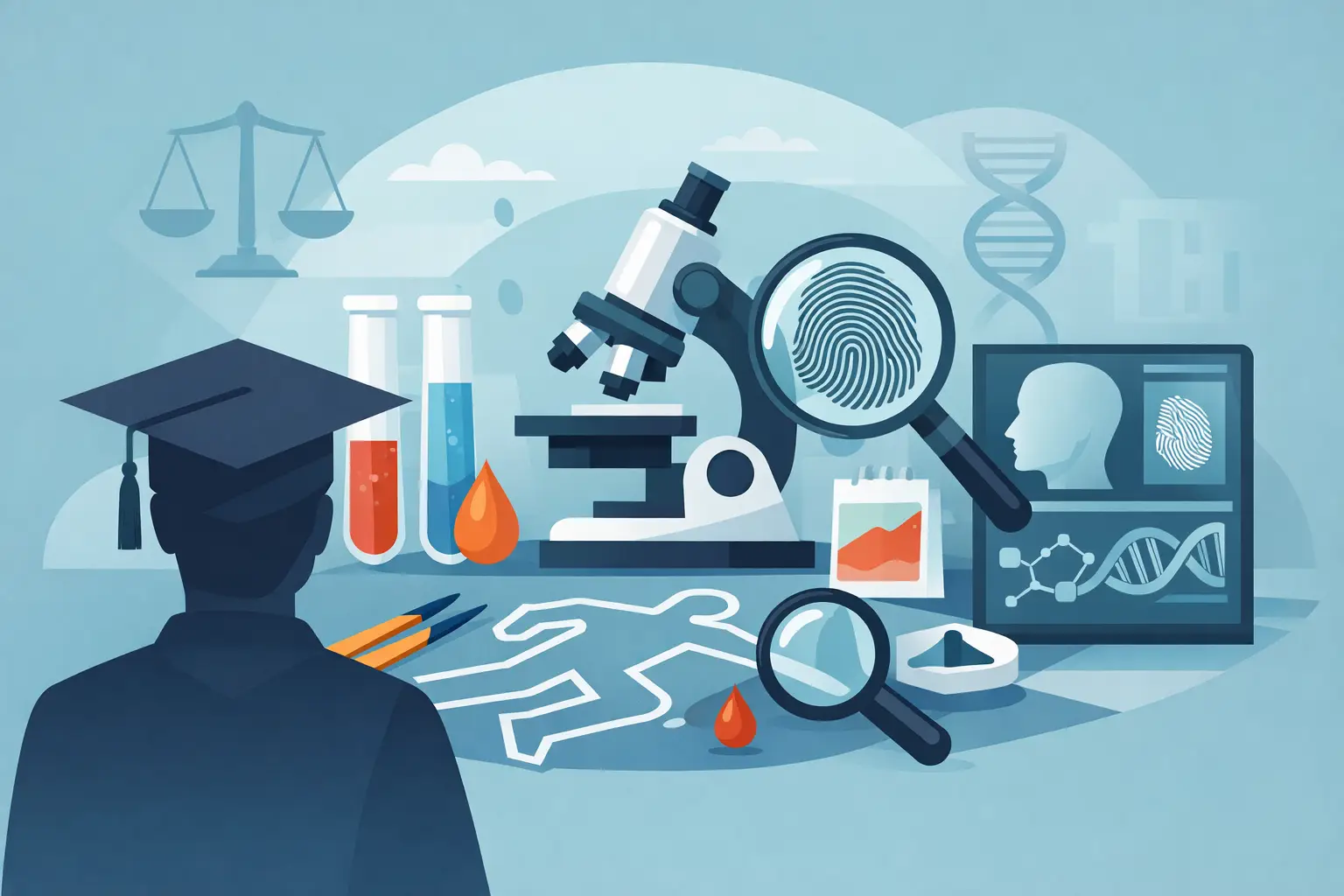
A strong forensic science degree should do more than look impressive on paper. It should sharpen how you think, strengthen how you handle evidence, and prepare you for the realities of investigative work – whether your path leads to a crime lab, digital forensics unit, fraud investigation team, or a graduate specialization in behavioral analysis.
That is why the search for the best forensic science degrees is rarely about prestige alone. For adult learners and career-focused professionals, the better question is more specific: best for what role, what level of study, and what kind of expertise you want to build over time.
What makes the best forensic science degrees stand out
The strongest programs share a few defining qualities. First, they connect scientific method to professional practice. Forensic science is not simply a collection of technical procedures. It is an applied discipline shaped by chain of custody, legal standards, reporting accuracy, ethics, and courtroom scrutiny. A degree that teaches theory without showing how that theory performs under real investigative pressure is incomplete.
Second, quality programs are built around specialization. Some students need a broad undergraduate foundation in chemistry, biology, and evidence analysis. Others are already established professionals and need graduate-level study in forensic psychology, digital investigations, fraud examination, behavioral science, or criminal profiling. The best option depends on where you are starting and where you intend to go next.
Third, faculty quality matters more here than in many other fields. Forensic education becomes far more valuable when it is shaped by professionals who understand casework, investigative systems, legal processes, and interdisciplinary collaboration. Academic depth matters, but so does practitioner credibility.
Not all forensic science degrees lead to the same careers
One of the most common mistakes prospective students make is treating forensic science as a single career track. It is not. The field includes multiple pathways, and each requires a different educational profile.
A laboratory-focused student may need strong preparation in biology, chemistry, toxicology, or trace evidence. Someone interested in cybercrime may be better served by a program tied to cybersecurity, digital evidence, and investigative analytics. A professional in law enforcement or compliance may benefit more from graduate study in behavioral science, interviewing, deception detection, or anti-fraud strategy than from a traditional lab-heavy curriculum.
This is where many rankings fall short. They often group very different programs under one label, which can make a degree seem stronger or weaker than it really is for your goals. A top-ranked crime lab program may be the wrong fit for a working investigator seeking behavioral expertise. A respected online master’s may be a stronger choice for a mid-career professional than a campus-based program designed for full-time students in their early twenties.
Best forensic science degrees by degree level
Bachelor’s degrees
For students at the beginning of their academic path, a bachelor’s degree in forensic science can provide the scientific base needed for entry-level work or later graduate study. The best undergraduate programs usually include biology, chemistry, microscopy, evidence procedures, statistics, and criminal justice context. If the program is aimed at laboratory careers, the science requirements should be rigorous, not diluted.
This matters because many forensic roles still depend on strong hard-science training. If a bachelor’s curriculum leans heavily on true crime appeal and lightly on analytical science, that is a warning sign.
Master’s degrees
For many adult learners, the most strategic option is a master’s degree. Graduate study allows you to specialize, reposition your career, or develop advanced expertise without starting from scratch. The best forensic science degrees at the master’s level are usually focused rather than overly broad. They may emphasize forensic investigation, forensic psychology, digital forensics, behavioral analysis, fraud detection, or leadership in investigative settings.
This is also where online education can be especially effective. For working professionals, the ability to study without relocating is not simply a convenience. It makes advanced education possible while preserving career momentum. A serious online graduate program should still offer academic rigor, practitioner-led instruction, and strong engagement with current investigative challenges.
Certificates and continuing education
Not every learner needs a full degree immediately. In some cases, a graduate certificate or targeted continuing education program is the better move. If you already hold a degree and need focused expertise in a niche area, a shorter credential can help you build credibility and test a specialization before committing to a longer program.
How to judge program quality beyond rankings
If you are comparing programs, start with curriculum design. Does the coursework reflect the actual demands of forensic work, or is it built around generic criminal justice content with a forensic label attached? The best forensic science degrees show clear intellectual architecture. They move from foundational principles to advanced application, and they make room for ethics, legal admissibility, analytical reasoning, and professional communication.
Next, look closely at faculty. A strong program should not rely on reputation by association. It should show who teaches, what they have done, and why their experience matters. Faculty with backgrounds in forensic practice, policing, federal investigation, behavioral science, psychology, fraud analysis, or applied research can bring a level of seriousness that purely promotional language cannot.
Then consider learning format. For campus-based study, access to labs and supervised practical training may be central. For online graduate study, quality shows up differently – in course design, faculty interaction, case-based learning, research expectations, and relevance to professional environments. Online does not mean lesser. But it does mean you should look for intentional structure rather than passive content delivery.
Finally, evaluate whether the program understands the profession as it exists now, not as it existed ten years ago. Modern forensic and investigative work increasingly intersects with cyber threats, behavioral intelligence, financial crime, transnational risk, and data interpretation. Programs that ignore this wider reality can leave students with narrow preparation.
Why specialization often beats generalization
Broad programs can be useful early in an academic journey, but specialized education often delivers more value at the graduate level. Employers and professional networks increasingly reward depth. They want analysts who understand fraud patterns, investigators who can assess behavior, cybersecurity professionals who can preserve digital evidence, and leaders who can interpret human decision-making under pressure.
This shift is one reason specialized institutions can be compelling. A focused university with expertise in forensic and behavioral disciplines may offer a more coherent educational experience than a large generalist school where forensic topics are only a small part of the academic ecosystem. When curriculum, research, faculty expertise, and community all point in the same direction, students often gain more than a credential. They gain a professional identity.
For learners drawn to the intersection of forensic science and human behavior, that distinction is especially meaningful. Investigations do not unfold in a vacuum. Evidence is gathered, interpreted, challenged, and contextualized by people. Understanding behavior, communication, bias, credibility, and decision-making can strengthen forensic work in ways a purely technical curriculum may not.
Online vs. on-campus: which is better?
It depends on the type of forensic education you need. If your goal is highly lab-dependent training at the undergraduate level, on-campus study may offer advantages. Physical lab access and structured scientific practice can be difficult to replace fully online.
But for graduate learners, especially professionals already working in policing, security, psychology, compliance, intelligence, or criminal justice, online programs can be the stronger choice. They offer flexibility, geographic access, and often greater compatibility with real-world professional application. What matters is not the delivery mode by itself. What matters is whether the program is demanding, current, and aligned with your field.
This is where institutions such as Evidentia University reflect a broader evolution in advanced education. Professionals increasingly want specialized, globally accessible programs that combine academic rigor with instruction shaped by real investigative and behavioral expertise.
Questions to ask before you apply
Before choosing a program, ask what role you want this degree to play in your next five years. Do you want entry into forensic work, advancement in your current field, a pivot into a niche specialty, or preparation for doctoral-level research? The answer changes what “best” should mean.
Also ask whether the curriculum is scientifically or professionally credible for your path, whether the faculty bring meaningful field experience, and whether the format fits the life you actually lead. A degree that looks ideal but cannot be sustained alongside work and family responsibilities may not be the right investment.
Cost matters too, but it should be weighed against relevance. The cheapest program is not the best value if it leaves gaps in knowledge, credibility, or advancement potential. At the same time, the most expensive option is not automatically stronger. In forensic education, fit often matters more than brand recognition alone.
The best forensic science degrees are the ones that make you more capable, more credible, and more prepared for the complexity of modern investigative work. Choose the program that meets your ambitions with equal seriousness, and the degree becomes more than an academic milestone – it becomes part of the professional future you are ready to build.