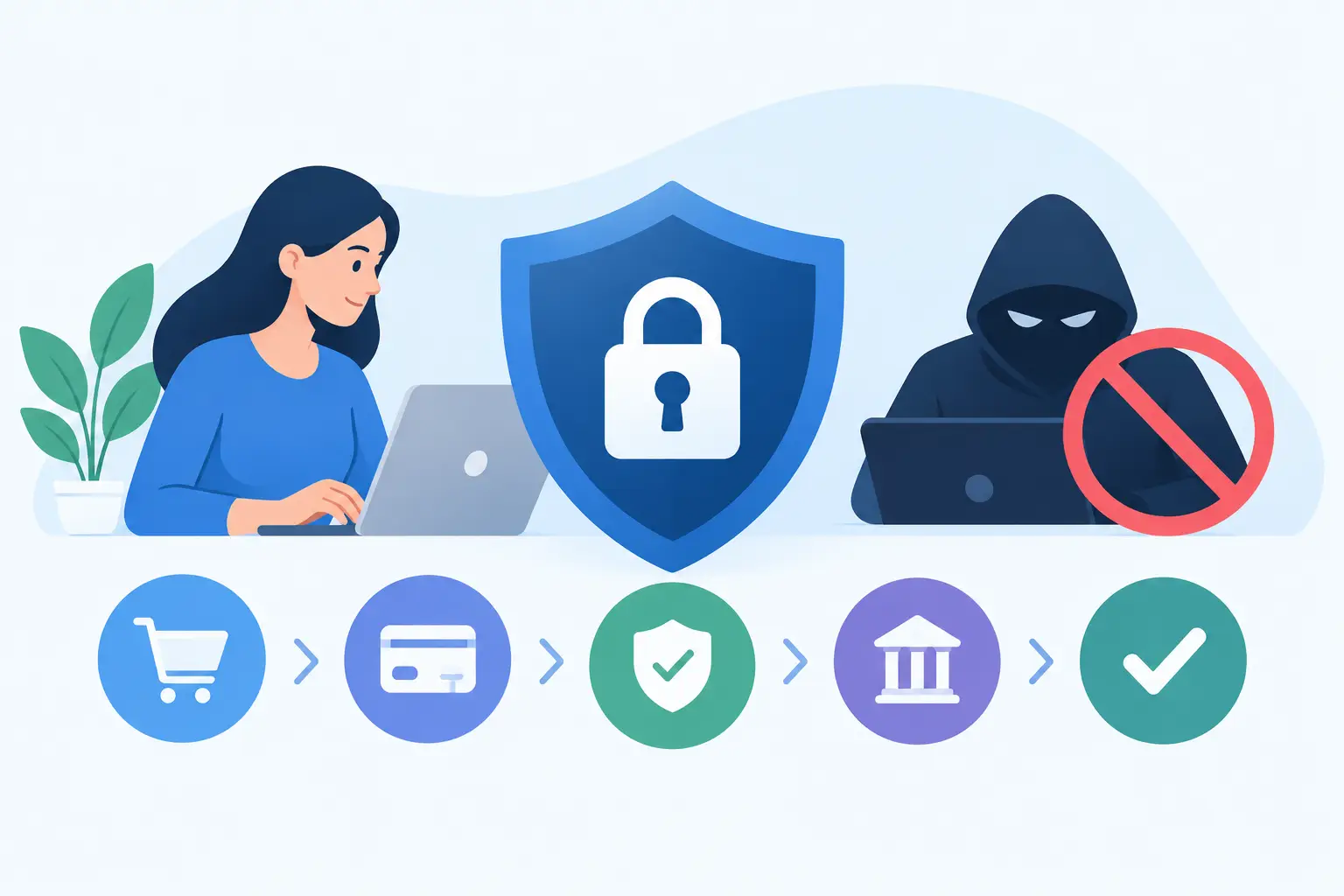
A payment fraud loss rarely begins at the moment money leaves an account. It usually begins earlier: an employee trusts a convincing email, a customer is rushed through an unfamiliar checkout process, or a team overlooks a small anomaly because each data point seems explainable on its own. Learning how to prevent payment fraud therefore requires more than selecting a fraud tool. It requires understanding behavior, designing controls around real decisions, and treating suspicious activity as evidence rather than inconvenience.
For professionals in security, compliance, finance, law enforcement, and risk management, the central challenge is balance. Controls must deter and detect bad actors without creating so much friction that legitimate customers, vendors, or employees are pushed away. The strongest programs are layered, adaptive, and grounded in the way people actually behave under pressure.
Why payment fraud succeeds
Payment fraud includes unauthorized card transactions, account takeover, business email compromise, synthetic identity fraud, refund abuse, invoice redirection, and fraudulent transfers. The methods differ, but many attacks exploit the same conditions: weak verification, fragmented ownership, excessive urgency, and incomplete visibility across systems.
Criminals do not always need to defeat sophisticated technology. They often need one person to bypass a procedure. A spoofed vendor email that requests new banking details may look credible because it uses a familiar logo, references a real project, and arrives near the end of a busy workday. A social engineering attempt works because it targets attention, authority, and emotion as much as it targets systems.
This is why a narrow focus on transaction monitoring is insufficient. Transaction data can reveal unusual amounts, locations, devices, or payment patterns. Yet the human context often explains whether an anomaly is a genuine threat, an error, or a legitimate exception. Effective prevention connects both forms of intelligence.
How to prevent payment fraud with layered controls
No single control will stop every scheme. Fraud prevention works best as a sequence of barriers that make unauthorized activity harder to initiate, harder to complete, and easier to investigate. If one barrier fails, another should slow the event long enough for detection and intervention.
Verify identity before approving risk
Strong identity verification should match the level of risk. A low-value purchase may require basic authentication, while a new payee, large wire transfer, password reset, or change to banking information should trigger additional verification. Multi-factor authentication is particularly valuable because stolen passwords remain a common entry point for account takeover.
Verification must also be independent when payment instructions change. If a vendor emails new account details, do not reply to that email or call the number included in it. Confirm the request using a known phone number or trusted contact record. This small discipline can prevent a high-impact business email compromise event.
For consumer-facing environments, device recognition, address verification, one-time passcodes, and step-up authentication can reduce risk. The trade-off is friction. Organizations should apply stronger checks where the potential loss or behavioral anomaly justifies them, rather than treating every transaction as equally suspicious.
Separate authority from execution
Fraud thrives when one person can create, approve, and release a payment without meaningful review. Segregating duties introduces accountability and reduces the chance that a single compromised account can move funds unchecked.
For higher-risk payments, use dual authorization. One employee prepares the payment, and another reviews the beneficiary, amount, purpose, and supporting documentation. The second reviewer should not simply confirm that fields are complete. They should ask whether the payment makes operational sense and whether anything has changed from the usual pattern.
This control is especially important for remote teams, where informal approvals can move through chat messages, email threads, or mobile devices. Convenience is not evidence. A documented approval workflow creates an audit trail and makes it easier to reconstruct events if a concern emerges later.
Monitor behavior, not just transactions
A single transaction may appear normal in isolation. A sequence may not. Fraud analytics should look for deviations from established behavior: a new device logging in from an unfamiliar region, multiple failed login attempts followed by a successful password reset, unusual changes to customer account details, or several refunds issued shortly before a large payout.
Behavioral indicators are most useful when investigators can interpret them with care. Travel, seasonal sales, organizational restructuring, and emergency purchasing can create legitimate anomalies. Automated systems should prioritize events for review, but experienced professionals must evaluate context, corroborating evidence, and alternative explanations before making high-consequence decisions.
This approach also reduces false positives. When legitimate customers are repeatedly declined or challenged without explanation, organizations lose trust and may unintentionally teach customers to abandon secure procedures. Precision matters as much as detection volume.
Protect the payment environment
Payment security depends on the basic hygiene of systems, devices, data, and access. Keep payment platforms and integrations patched, restrict privileges to what each role requires, and remove access quickly when a contractor or employee changes roles. Shared credentials should never be used for financial activity because they erase accountability and complicate investigations.
Sensitive payment data should be minimized, protected, and retained only when there is a legitimate business need. The less valuable data an organization stores, the less it can expose in a breach. Teams should also assess third parties that handle payments, customer data, cloud infrastructure, or communications. A secure internal process can still be undermined by an exposed vendor account or poorly managed integration.
Train for judgment under pressure
Annual compliance training alone does not prepare people for a persuasive fraud attempt. The most effective education uses realistic scenarios and teaches employees what to do when pressure is applied. A request framed as confidential, urgent, or coming from senior leadership should increase scrutiny, not reduce it.
Training should address the cues that commonly influence decisions: authority, scarcity, fear of delay, and the desire to be helpful. Employees need clear escalation paths, including permission to pause a payment without being punished for slowing a deadline. A culture that rewards speed at any cost is vulnerable by design.
Short, recurring exercises are often more effective than long, infrequent sessions. For example, teams can examine anonymized examples of altered invoices, phishing messages, or suspicious refund patterns and discuss the indicators they would verify. This turns fraud awareness from a policy requirement into a professional capability.
Build a response process before an incident
Even mature controls will not prevent every attempt. What distinguishes a prepared organization is the speed and discipline of its response. Staff should know who has authority to freeze an account, pause a transfer, contact a bank or payment processor, preserve evidence, and communicate with affected parties.
A response plan should define thresholds for escalation and preserve a reliable timeline. Record the transaction details, user activity, communications, device information, approval history, and any changes to account or vendor records. Early evidence may be critical for recovery efforts, internal review, insurance claims, and potential law enforcement referrals.
After containment, examine the failure without reducing it to individual blame. Was the approval process unclear? Did an alert lack context? Was a team member given too much access? Did a vendor update process rely on email alone? The goal is not merely to close a case. It is to improve the system that allowed the event to progress.
Measure what the organization learns
Fraud prevention is a living discipline. Track attempted and confirmed fraud, time to detect, time to contain, recovery rates, false-positive rates, and recurring control failures. These measures help leaders distinguish between a program that appears active and one that is genuinely reducing risk.
Reviewing cases across departments can reveal patterns that no single team can see. Finance may recognize unusual payment timing, cybersecurity may identify compromised credentials, and human resources may spot changes in personnel status that affect access. Payment fraud sits at the intersection of technology, process, and human behavior, so its prevention must be cross-functional as well.
For professionals seeking to lead in this area, advanced study in behavioral analysis, cybersecurity, investigative practice, and anti-fraud strategy provides more than technical vocabulary. It develops the judgment to recognize when a routine event is not routine, ask better questions, and act before suspicion becomes loss. That capacity to observe carefully and intervene decisively is where stronger payment security begins.