A forensic science master’s degree can be a defining professional investment, but the title of the program alone does not tell you whether it will move your career forward. A meaningful forensic science masters review starts with a sharper question: what kind of forensic professional do you intend to become, and what evidence proves that a program can prepare you for that work?
For professionals already balancing demanding roles in law enforcement, security, psychology, compliance, or criminal justice, the answer is rarely found in a ranking table. It is found in the curriculum, the people teaching it, the program’s academic standards, and the practical relevance of every subject. The strongest choice is not necessarily the broadest degree. It is the one aligned with the problems you want to solve.
What a Forensic Science Master’s Degree Should Deliver
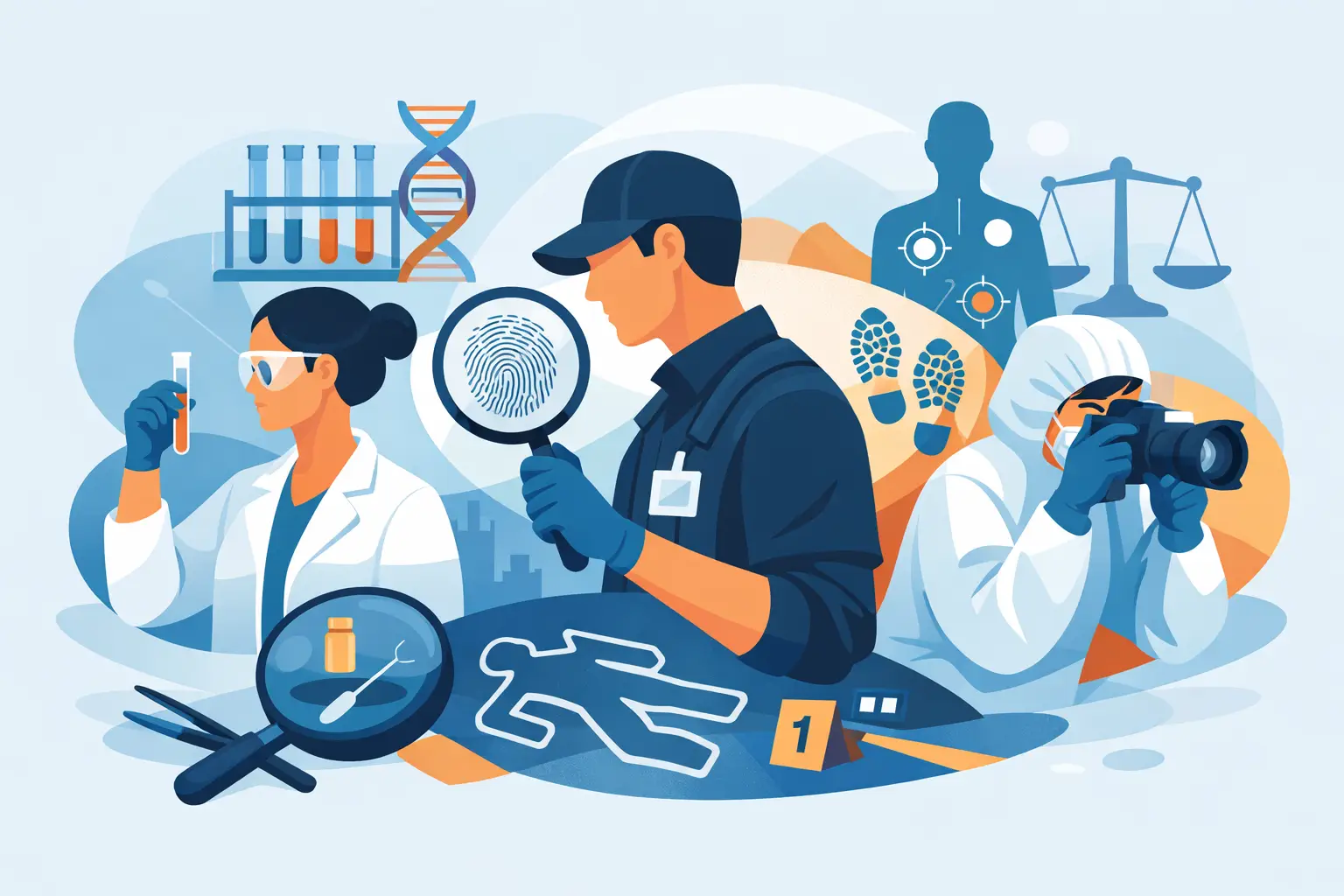
Forensic science is not one occupation. It includes laboratory analysis, crime scene investigation, digital investigations, forensic psychology, intelligence analysis, fraud examination, behavioral assessment, and the interpretation of evidence in legal contexts. A master’s program should be clear about the part of that landscape it serves.
This distinction matters because a laboratory-focused degree may emphasize biology, chemistry, instrumentation, quality assurance, and validation. That can be essential for students pursuing technical forensic laboratory careers. A program centered on investigative or behavioral applications may instead examine criminal behavior, victimology, interviewing, decision-making, intelligence, investigative psychology, and the evidentiary limits of behavioral conclusions.
Neither direction is inherently better. They lead to different forms of expertise. Before applying, compare the curriculum with actual job descriptions in your intended field. If you want to lead fraud inquiries or contribute to threat assessment, a degree built primarily around laboratory methods may not be the right fit. If you plan to work in a laboratory environment, a program without substantial scientific and technical training may leave critical gaps.
A credible master’s degree should also teach students to think beyond the immediate case. That means evaluating the reliability of evidence, recognizing bias, understanding ethical obligations, communicating findings precisely, and applying research rather than relying on intuition. Forensics affects legal outcomes, organizational decisions, and public trust. Graduate education should reflect that level of responsibility.
A Forensic Science Masters Review of Curriculum Quality
Course titles can sound compelling while revealing very little about depth. Look beyond labels such as “advanced forensics” or “criminal investigation.” Review the learning outcomes, required assignments, faculty expertise, and the relationship between courses. A coherent program builds knowledge progressively rather than presenting a collection of interesting but disconnected topics.
At the graduate level, students should encounter research methods and critical analysis, not only applied techniques. Professional experience is valuable, but advanced education should help you assess claims, challenge weak assumptions, and explain why a method is appropriate in a particular context. This is especially relevant in fields where public interest, media narratives, and investigative pressure can distort judgment.
Strong curricula connect theory to professional decisions. In behavioral and investigative disciplines, for example, students may study how cognitive bias affects interviews, how deception research should and should not be interpreted, or how behavioral evidence can inform an inquiry without being overstated. The goal is not to produce certainty where evidence does not support it. The goal is to improve the quality of reasoning.
Capstone projects, case analyses, research papers, and structured assessments are also worth examining. They show whether the degree asks students to synthesize knowledge under realistic conditions. A program that requires meaningful independent work can offer stronger evidence of academic rigor than one built solely around passive content consumption.
Practitioner Faculty Matter, but So Does Academic Discipline
Faculty profiles deserve close attention. In forensic education, instructors with experience in policing, the FBI, intelligence, psychology, criminology, cybersecurity, financial investigations, or applied research can bring the classroom closer to real professional conditions. They understand the operational constraints that textbooks may overlook: incomplete information, time pressure, legal standards, institutional politics, and the human consequences of investigative error.
Yet practitioner experience should not substitute for scholarly discipline. The best programs combine both. Faculty should be able to connect field experience with established research, methodological caution, and ethical practice. A compelling career biography is valuable, but prospective students should also ask whether instructors can teach students to evaluate evidence independently.
Guest experts can add further perspective, particularly when they expose students to different jurisdictions, sectors, and investigative cultures. For international learners, this range is especially useful. Forensic practice varies across legal systems and organizations, but the habits of disciplined inquiry travel well.
Online Learning Should Be Designed for Serious Professionals
Online delivery has widened access to specialized graduate education, especially for professionals who cannot relocate or step away from full-time work. But convenience is not the same as quality. The key question is whether the online environment supports rigorous learning rather than simply delivering recorded material.
Look for a clear academic calendar, predictable expectations, accessible faculty, substantive discussion, and timely feedback. Adult learners need flexibility, but they also need structure. A program that respects professional schedules while maintaining deadlines, high standards, and regular engagement is more likely to produce lasting development.
The practical limits of online study should be acknowledged. Certain laboratory competencies require in-person equipment, supervised practice, or partnerships with approved facilities. An online degree can be highly effective for analytical, behavioral, investigative, leadership, intelligence, policy, and research-oriented education. It may be less suitable when your target role requires extensive hands-on laboratory certification or specific physical techniques. That is not a weakness of online education as a whole. It is a matter of matching the format to the competency.
Global classrooms can be a genuine advantage. Students learn how investigative challenges are understood across cultures, institutions, and legal traditions. For professionals handling cross-border fraud, cybercrime, corporate risk, or transnational security concerns, this perspective can be directly relevant.
Credibility Is More Than a Marketing Claim
A master’s degree should strengthen your professional credibility, so evaluate how the institution demonstrates its own. Review its academic leadership, admissions standards, student support, assessment practices, and commitment to research or professional dialogue. An institution that publishes, convenes experts, and contributes to its field signals that education is part of a larger intellectual mission.
You should also verify the practical details that affect your decision: recognition in your jurisdiction, transfer policies if relevant, tuition and financial aid options, time to completion, and any requirements related to licensure or employment. No institution should imply that a degree automatically guarantees a particular position, promotion, or certification. Hiring decisions depend on your background, local requirements, prior training, experience, and the needs of the employer.
For a specialized institution such as Evidentia University, the value may lie in focused study at the intersection of forensic and behavioral sciences rather than attempting to replicate every pathway offered by a large generalist university. For the right student, specialization can create a clearer professional identity. For another, a broader program may be more useful. The relevant measure is alignment, not institutional size.
Measure Return by Capability, Not Just Salary
Career outcomes matter, and prospective students should be candid about cost. Still, the return on a forensic master’s degree is not limited to an immediate salary increase. In many fields, the degree’s value appears through expanded responsibility, stronger analytical confidence, eligibility for specialized work, credibility with peers, or a shift into a related discipline.
Ask what you will be able to do after graduation that you cannot do now. Perhaps you will be better prepared to assess behavioral risk, lead more defensible investigations, communicate evidence to non-specialists, design anti-fraud controls, or pursue doctoral study. Those capabilities can compound over time.
It is equally wise to consider opportunity cost. How many hours each week can you realistically commit? Will your employer support the work? Does the course sequence match your career timeline? A demanding program can be worthwhile, but only if its pace allows you to participate fully rather than merely complete assignments.
Questions Worth Asking Before You Apply
Before making a final decision, speak with admissions representatives and ask direct questions. How are students assessed? What does faculty interaction look like in a typical week? Which professional backgrounds do students bring into the program? What research, casework, or applied projects will you complete? How does the curriculum distinguish evidence-based practice from popular but unsupported claims?
Also ask yourself a more personal question: are you seeking a credential, or are you prepared to change how you think? The most valuable graduate programs do more than add a line to a résumé. They develop judgment under uncertainty, precision in communication, and the intellectual discipline to make decisions that can withstand scrutiny.
Choose the program that asks more of your curiosity than your application. That is often where professional transformation begins.