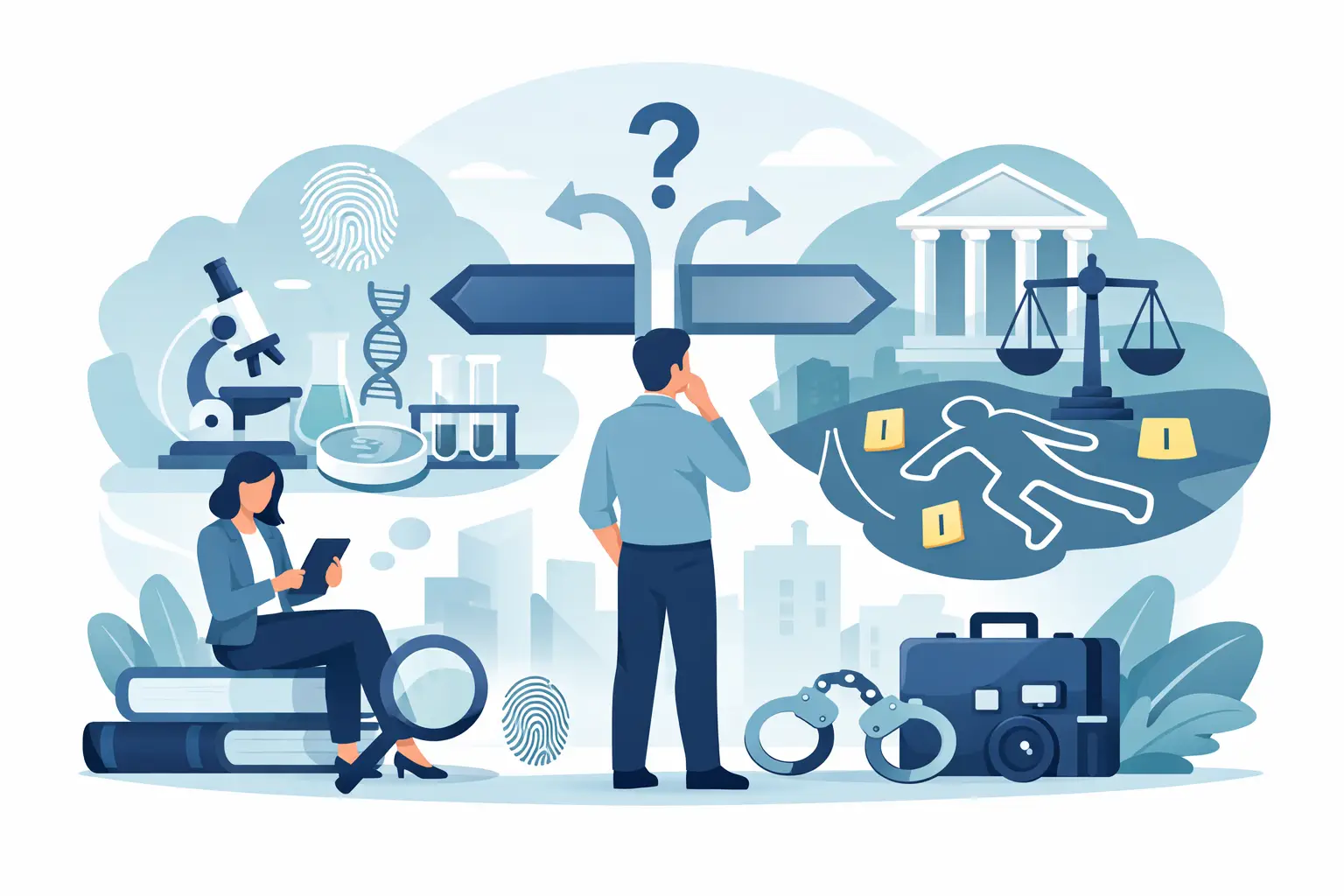
A forensic master’s degree is not a single career path packaged under one title. It may lead toward crime analysis, digital investigations, behavioral research, laboratory work, intelligence, fraud examination, or policy. That is why learning how to choose forensic masters programs begins with a precise question: what kind of problem do you want to be trusted to solve?
For working professionals and academically driven graduates alike, the right program should add more than a credential. It should build specialized judgment, strengthen professional credibility, and give you knowledge that can be applied where consequential decisions are made. The best choice depends on your intended role, prior education, geographic requirements, and the depth of expertise you need.
Start With the Forensic Field You Actually Want to Enter
“Forensics” is often used as a broad label, but employers hire for specific capabilities. A master’s in forensic psychology serves a different purpose from a degree in forensic science, cybersecurity, criminal intelligence, or fraud and financial crime analysis. Selecting a program before defining your professional direction can leave you with interesting coursework that does not meet the expectations of your target field.
Begin by examining the work itself. If your goal is laboratory-based evidence analysis, prioritize programs grounded in biology, chemistry, quality assurance, and scientific methods. If you are interested in understanding offender behavior, interviewing, threat assessment, or criminal profiling, a behavioral and investigative curriculum may be more relevant. Professionals moving into corporate security, compliance, or anti-fraud work may benefit most from programs that connect behavioral science with risk, investigations, and decision-making.
Also distinguish between an academic specialty and a licensed profession. A master’s degree in forensic psychology, for example, does not automatically qualify a graduate for independent clinical practice or psychologist licensure in the United States. Licensing rules are determined by state boards and usually require particular doctoral education, supervised experience, and examinations. A strong program will be clear about what its degree prepares students to do and what it does not.
How to Choose Forensic Masters Programs by Curriculum
A program title can signal an area of study, but the curriculum reveals its true intellectual center. Review required courses, elective options, assessment methods, and any final project or capstone. Look beyond introductory subjects and ask whether the program develops advanced analytical ability.
A career-relevant forensic master’s curriculum should generally include research methods, ethics, legal context, evidence-based reasoning, and opportunities to apply theory to realistic cases. From there, the specialized content should match your goals. In behavioral fields, this may include investigative interviewing, deception detection, victimology, offender behavior, threat assessment, and decision science. In technical programs, it may involve evidence handling, laboratory processes, digital evidence, incident response, or forensic reporting.
Depth matters more than a long list of fashionable topics. A course on criminal profiling may be compelling, but it has greater value when taught alongside research literacy, cognitive bias, legal standards, and the limitations of behavioral inference. Forensic work demands disciplined thinking. Programs should prepare students to communicate findings carefully, recognize uncertainty, and avoid overstating what evidence can prove.
Consider how learning is evaluated as well. Essays and examinations have their place, but applied fields benefit from case analysis, investigative exercises, research projects, simulated interviews, professional reports, and structured presentations. These assignments develop the judgment required when your analysis may influence a security decision, an investigation, or a legal process.
Evaluate Faculty Through Both Scholarship and Practice
Faculty quality is one of the most consequential differences between two otherwise similar degrees. In forensic and behavioral disciplines, students benefit from professors who understand both the research base and the realities of professional practice.
Review faculty biographies with care. Look for relevant academic qualifications, publications, research activity, and substantive experience in areas such as law enforcement, intelligence, psychology, criminology, cybersecurity, fraud investigation, or policy. Practitioner experience alone is not enough, just as academic credentials alone may not guarantee insight into contemporary investigative work. The strongest learning environments bring these perspectives together.
Guest experts can add significant value when their participation is integrated into the program rather than presented as occasional publicity. A lecture from an investigator, behavioral specialist, or cybercrime professional can broaden perspective. Ongoing access to faculty who can challenge assumptions, provide meaningful feedback, and connect concepts to real cases is what turns exposure into advanced education.
Ask practical questions during the admissions process. Who teaches the core courses? How accessible are instructors outside scheduled sessions? Do students receive individualized feedback on applied work? Are faculty actively contributing to research or practice in the discipline? Direct answers are a useful indicator of institutional confidence and student support.
Verify Recognition, Standards, and Outcomes
Accreditation and authorization deserve careful attention, particularly for students studying online or across national borders. Confirm the institution’s legal authority to award the degree and understand the accreditation framework that applies to it. Then determine whether your intended employer, licensing body, government agency, or future doctoral program has additional expectations.
There is no universal checklist because standards vary by specialty. Laboratory-focused forensic science programs may be assessed against different professional benchmarks than degrees in criminal behavior or intelligence analysis. If you plan to use the degree for licensure, promotion within a public agency, immigration purposes, or doctoral admission, verify requirements directly with the relevant organization before enrolling.
Career outcomes should also be interpreted intelligently. A university cannot ethically promise employment, especially in competitive and regulated fields. It can, however, demonstrate professional relevance through transparent learning outcomes, alumni pathways, applied assessments, faculty expertise, and a curriculum aligned with real workplace demands.
Look for evidence that graduates are prepared to write clearly, analyze critically, manage ethical complexity, and work across disciplines. These are durable capabilities. Tools, policies, and technologies change, but rigorous reasoning remains central to investigative and forensic practice.
Decide Whether the Online Format Supports Your Goals
Online education can expand access to specialized graduate study for professionals who cannot relocate or pause their careers. It can also create a genuinely international classroom, bringing together perspectives from law enforcement, security, behavioral research, business, and public policy. But flexibility should not be confused with a lighter academic experience.
Evaluate the design of the online learning environment. Are courses asynchronous, live, or blended? Are there clear weekly expectations? How are discussions moderated? What technology is required? Will you have access to academic advising, library resources, writing support, and responsive student services?
For professionals with shift work, travel, or family responsibilities, scheduling may be decisive. Yet a program that is entirely self-paced can be a poor fit for students who value live intellectual exchange and regular faculty contact. Conversely, frequent mandatory live sessions may be impractical across time zones. The right format is the one that allows you to participate fully without forcing you to compromise the standards you expect from graduate education.
If your specialization requires hands-on laboratory competencies, be especially careful. An online degree may be excellent for theory, analysis, management, behavioral science, or digital investigative topics, but some laboratory skills require in-person facilities, supervised practice, or external placements. Ask exactly how practical competencies are taught and assessed.
Assess the Community Around the Degree
Graduate education is also a professional network. This is particularly valuable in forensic fields, where careers often develop through credibility, collaboration, and exposure to adjacent disciplines. A strong institution creates opportunities for students to engage with research, professional conversations, expert talks, publications, and peers from varied backgrounds.
Consider whether the program treats students as participants in an academic community or simply as recipients of course content. The difference becomes visible in the quality of advising, discussion, mentoring, research opportunities, and alumni engagement. At a specialist institution such as Evidentia University, this focus can be especially meaningful for learners seeking a community centered on investigative and behavioral expertise rather than a broad catalog of unrelated programs.
Community should serve your professional purpose, not distract from it. If you hope to move into a niche area, seek peers and faculty who can expose you to the language, ethical expectations, and emerging questions shaping that field.
Compare Cost as an Investment, Not Just a Price
Tuition matters, but the lowest-cost program is not automatically the best value. Compare the full cost of attendance, including fees, technology, books, residencies, and any travel required for practical components. Then consider what the degree provides in return: specialized curriculum, faculty access, academic support, career relevance, and the credibility of the institution.
Be realistic about return on investment. Some forensic roles have clear salary structures, while others offer value through promotion eligibility, expanded responsibilities, a transition into a related field, or preparation for doctoral study. Define the outcome you expect before calculating whether the investment makes sense.
Financial aid, employer tuition assistance, and payment plans may affect your options, but they should not replace careful academic evaluation. A program is worth pursuing when it fits your goals and you have a sustainable plan to complete it successfully.
The most useful master’s degree is one that makes your next professional decision clearer. Choose the program that demands rigorous thought, respects the complexity of forensic work, and positions you to contribute with greater skill, judgment, and integrity.